A steak and a bowl of spinach both contain iron, yet your gut absorbs it from them at wildly different rates. That difference is not about how much iron sits on the plate, but about the chemical form the iron arrives in and the machinery your small intestine uses to let it through. Understanding that machinery explains why iron deficiency remains one of the most common nutritional problems worldwide despite iron being present in a huge range of everyday foods.
Iron absorption is a tightly regulated, genuinely selective process, not a simple matter of eating more iron-containing food. The body absorbs only a small fraction of the iron it consumes, and that fraction shifts dramatically depending on the food's source, what else is eaten alongside it, and the body's own current iron status.
Why Not All Dietary Iron Is Absorbed the Same Way
Dietary iron exists in two chemically distinct forms, heme iron and non-heme iron, and the human gut has evolved separate absorption pathways for each, with very different efficiency rates attached to them.
Heme iron, found only in animal flesh, is absorbed at roughly fifteen to thirty-five percent efficiency, while non-heme iron, found in plants, fortified foods, and also present alongside heme iron in meat, is absorbed at a far lower rate, typically between two and twenty percent depending heavily on what accompanies it in the same meal.
This split explains why nutrition guidance treats iron sources so differently and why people eating primarily plant-based diets are generally advised to pay closer attention to pairing iron-rich foods with absorption-boosting foods than someone who regularly eats red meat.
What Heme Iron Actually Is and Why It Absorbs Easily
Heme iron is iron bound inside the hemoglobin and myoglobin molecules found in animal muscle and blood, held within a ring-shaped organic structure called a porphyrin ring that shields the iron atom from the chemical interference that disrupts non-heme absorption.
Because this iron-porphyrin complex is absorbed by the intestinal cell essentially as a single intact package, through a dedicated heme transporter, it largely bypasses the competitive, easily blocked pathway that non-heme iron must use, which is the core reason its absorption rate is so much higher and so much less affected by other foods eaten at the same meal.
This is also why red meat, poultry, and fish are considered particularly reliable dietary iron sources in clinical nutrition guidance, not simply because of how much iron they contain but because of how consistently the body can actually extract and use it.
How Non-Heme Iron Has to Fight for Absorption
Non-heme iron, the form found in lentils, spinach, fortified cereal, and most plant foods, must first be chemically converted from its ferric form to its more soluble ferrous form at the gut lining before a separate transporter protein can carry it into the intestinal cell.
This conversion step, along with the transporter itself, is heavily influenced by other substances present in the same meal, some of which assist the reaction and some of which actively bind the iron and prevent it from ever reaching the transporter in an absorbable form.
This sensitivity to meal composition is the single biggest reason non-heme iron absorption varies so much more than heme iron absorption, and why the same plant food can deliver very different amounts of usable iron depending on what it is eaten with.
Where Absorption Actually Happens in the Gut
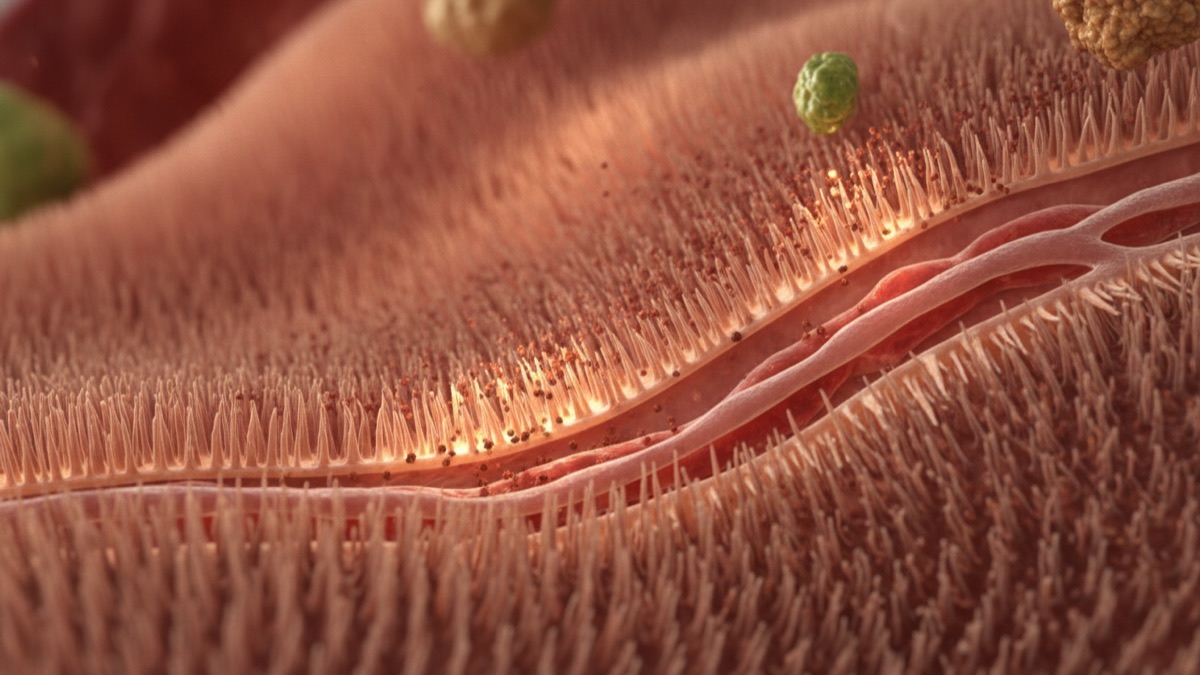
Iron absorption is concentrated almost entirely in the duodenum, the first short section of the small intestine immediately after the stomach, where the intestinal lining is specifically equipped with the transporter proteins and enzymes the process requires.
Stomach acid plays a supporting but essential role before this stage, helping to release iron from food matrices and keep non-heme iron in its more soluble, absorbable state as it passes into the duodenum, which is part of why conditions or medications that reduce stomach acid can measurably impair iron absorption.
Once past the duodenum, the small intestine's capacity to absorb additional dietary iron drops off sharply, which is one reason iron supplements are generally most effective when taken in a way that maximizes their time interacting with this specific region rather than being rushed through the gut.
How Hepcidin Controls Iron Like a Gatekeeper
The body does not simply absorb whatever iron happens to be available; it actively regulates absorption through a hormone called hepcidin, produced mainly by the liver, which acts as the master controller of how much iron is allowed to cross from the gut into the bloodstream.
When the body's iron stores are adequate or high, hepcidin levels rise and effectively shut down the transporter that moves iron out of intestinal cells into circulation, causing much of the iron absorbed by those cells to simply be shed and lost when the cells are naturally replaced days later.
When iron stores are low, hepcidin drops, the transporter reopens, and absorption efficiency rises substantially, which is the underlying reason the body genuinely does become better at extracting iron from food during periods of depletion, a self-regulating system that protects against both deficiency and dangerous overload.
Why Vitamin C Genuinely Boosts Non-Heme Absorption
Vitamin C is one of the most well-documented enhancers of non-heme iron absorption, working by converting ferric iron to the more absorbable ferrous form and by forming a soluble complex with iron that resists binding to the inhibitory compounds also present in many plant foods.
This effect is meaningful even at moderate amounts of vitamin C consumed in the same meal, which is the practical basis for common advice to pair iron-rich plant foods, such as lentils or spinach, with a source of vitamin C such as citrus fruit, bell peppers, or tomatoes.
The effect is specific to the same eating occasion; taking vitamin C at a completely different time of day does not meaningfully boost the absorption of iron eaten separately, since the chemical interaction has to happen while both are present together in the gut.
Why Phytates and Tannins Block Iron Absorption
Phytates, compounds found in whole grains, legumes, nuts, and seeds, bind tightly to non-heme iron in the gut and form complexes the intestinal transporter cannot take up, substantially reducing how much of that iron actually gets absorbed regardless of how much is technically present in the food.
Tannins, found in tea, coffee, and certain wines, have a similar inhibitory effect and are well documented to noticeably reduce iron absorption when consumed close to an iron-containing meal, which is why nutrition guidance for people managing low iron often specifically recommends separating tea or coffee from meals by an hour or more.
These effects do not make phytate- or tannin-containing foods harmful; they simply mean the iron in a lentil stew or a fortified cereal is genuinely less available than a lab measurement of its total iron content alone would suggest, which is why bioavailability, not raw iron content, is what actually matters nutritionally.
Why Calcium Competes With Iron for Absorption
Calcium is unusual among absorption inhibitors because it appears to interfere with both heme and non-heme iron absorption, likely by competing for shared transport machinery or by affecting the intestinal cell's processing of iron in ways researchers have not fully resolved.
This effect has been observed reliably in short-term studies, though its practical long-term significance for people with an otherwise balanced diet remains debated, since the body's regulatory systems appear able to compensate to some degree over repeated meals and days.
The practical guidance that follows is usually not to avoid calcium-rich foods but to be aware that a large calcium supplement taken at the exact same time as an iron supplement can measurably blunt the iron dose, which is why the two are often recommended at separate times of day.
How Cooking Changes How Much Iron You Actually Get
Cooking method genuinely affects how much iron ends up available for absorption, partly by breaking down plant cell walls and releasing bound iron, and partly through simpler mechanisms such as cooking acidic foods in cast iron cookware, which can measurably increase the iron content of the finished dish itself.
Soaking, sprouting, and fermenting grains and legumes before cooking reduces their phytate content substantially, a traditional practice in many cuisines that has a real, measurable effect on how much of their non-heme iron the body can actually use, independent of any change in the food's total iron content.
These preparation effects are modest individually but can add up meaningfully across a diet, which is part of why traditional food preparation methods developed in cultures relying heavily on legumes and grains often align closely with what modern nutrition science identifies as genuinely absorption-enhancing.
Why the Body Absorbs More Iron When It Is Low
Beyond the hepcidin mechanism, the intestinal cells themselves upregulate the production of iron transporter proteins when the body senses depletion, meaning the same meal can genuinely deliver more usable iron to someone who is iron-deficient than to someone with adequate stores.
This adaptive response is one reason iron absorption studies must control carefully for a participant's existing iron status, since simply comparing absorption rates between people without accounting for this factor can produce misleading conclusions about which foods or combinations are genuinely most effective.
It also means the same person's iron absorption efficiency changes meaningfully over their own life, rising during pregnancy, after significant blood loss, or during rapid growth in childhood and adolescence, periods when iron requirements increase substantially and the body compensates by extracting more from the same diet.
Why Iron Deficiency Is Still So Common Worldwide
Despite iron being present in a wide range of foods, iron deficiency remains one of the most common nutritional deficiencies globally, disproportionately affecting women of reproductive age, young children, and people following diets low in heme iron without deliberate attention to absorption-boosting food pairing.
Menstrual blood loss, pregnancy demand, and rapid growth all substantially increase iron requirements at exactly the life stages when dietary intake often does not rise to match, a mismatch that explains much of the demographic pattern seen in iron deficiency prevalence data worldwide.
Public health responses have included large-scale fortification of staple foods such as wheat flour in many countries, a measure shown to measurably reduce population-level iron deficiency, though fortification alone does not eliminate the underlying absorption challenges non-heme iron sources still face at the individual level.
What Actually Helps Iron Absorption in Practice
Pairing non-heme iron sources with a vitamin C source at the same meal remains one of the most consistently evidence-supported practical strategies, alongside separating tea and coffee consumption from iron-rich meals by roughly an hour to avoid the tannin interaction.
Soaking or sprouting legumes and grains before cooking, and including some heme iron in the diet where dietary patterns allow, both measurably improve overall iron absorption without requiring supplementation, though people with diagnosed deficiency generally still need supplements to correct it within a reasonable timeframe.
Why Iron Supplements Are Often Recommended on an Empty Stomach
Iron supplements are frequently prescribed to be taken on an empty stomach because food, particularly calcium-containing food, tea, coffee, and whole grains, can substantially reduce how much of the supplemental dose actually gets absorbed compared to taking it away from meals.
This guidance is often tempered in practice by tolerability, since iron supplements taken without food more commonly cause nausea or stomach discomfort, leading many clinicians to recommend a small amount of food alongside the dose as a reasonable compromise between absorption and adherence.
Newer alternate-day dosing protocols, based on research into how hepcidin responds to a single dose of iron, have shown in some studies that taking iron supplements every other day rather than daily can improve total absorption over time, since a large dose temporarily raises hepcidin and blunts absorption from a second dose taken too soon afterward.
How Iron Absorption Differs Between Infants, Adults, and Older Adults
Infants absorb iron at notably different rates than adults, and breast milk, despite containing relatively little iron by volume, delivers it in a form that is unusually well absorbed compared to infant formula, which is one reason pediatric nutrition guidance treats the two differently when assessing an infant's iron needs.
Older adults can face reduced iron absorption due to lower stomach acid production, a common age-related change, as well as a higher likelihood of taking medications that further suppress acid, both factors that clinicians consider when investigating unexplained iron deficiency in this age group.
These life-stage differences are a reminder that iron absorption is not a fixed personal trait but a dynamic process shaped by age, health status, and current physiological demand, all layered on top of the food-based factors described above and worth discussing with a clinician when deficiency is suspected.
Iron absorption ultimately depends less on how much iron a food contains on a label and more on its chemical form, what else shares the meal, and the body's own current need for it, a genuinely elegant regulatory system that explains why nutrition advice around iron focuses so heavily on food pairing rather than iron content alone.
Sources
- Wikipedia — overview of iron metabolism and absorption physiology
- World Health Organization — global iron deficiency anemia prevalence and guidance
- National Institutes of Health — iron fact sheet and absorption research
- U.S. Food and Drug Administration — food fortification standards
- European Food Safety Authority — dietary iron intake and bioavailability assessments
FAQ
Is heme iron always better than non-heme iron?
Heme iron is absorbed far more efficiently and consistently, but non-heme iron from plant foods can still meaningfully contribute to iron status, especially when paired with vitamin C and prepared to reduce phytate content.
Does drinking tea with meals really reduce iron absorption?
Yes — tannins in tea and coffee bind non-heme iron and measurably reduce its absorption, which is why separating them from iron-rich meals by about an hour is commonly recommended.
Why does the body absorb more iron when you are deficient?
Low iron stores reduce hepcidin and upregulate intestinal iron transporters, both of which increase the fraction of dietary iron actually absorbed compared to someone with adequate iron stores.
Does calcium interfere with iron absorption?
Calcium can measurably blunt iron absorption when consumed simultaneously in large amounts, particularly from supplements, so many guidelines recommend spacing large calcium and iron doses apart.
Why is iron deficiency still common if iron is in so many foods?
Absorption efficiency varies enormously by food source and meal composition, and requirements rise sharply during menstruation, pregnancy, and growth, often outpacing effective intake even when iron-containing foods are eaten regularly.
About the Author
We reference Wikipedia, the World Health Organization, the National Institutes of Health, the U.S. Food and Drug Administration, and the European Food Safety Authority to explain the background and current understanding of this topic.
Loved This Article?
Share it on WhatsApp → Share it on WhatsApp
Get more guides in your inbox — Subscribe to our newsletter for weekly surprising stories from Egypt, Saudi Arabia, Dubai, and beyond.