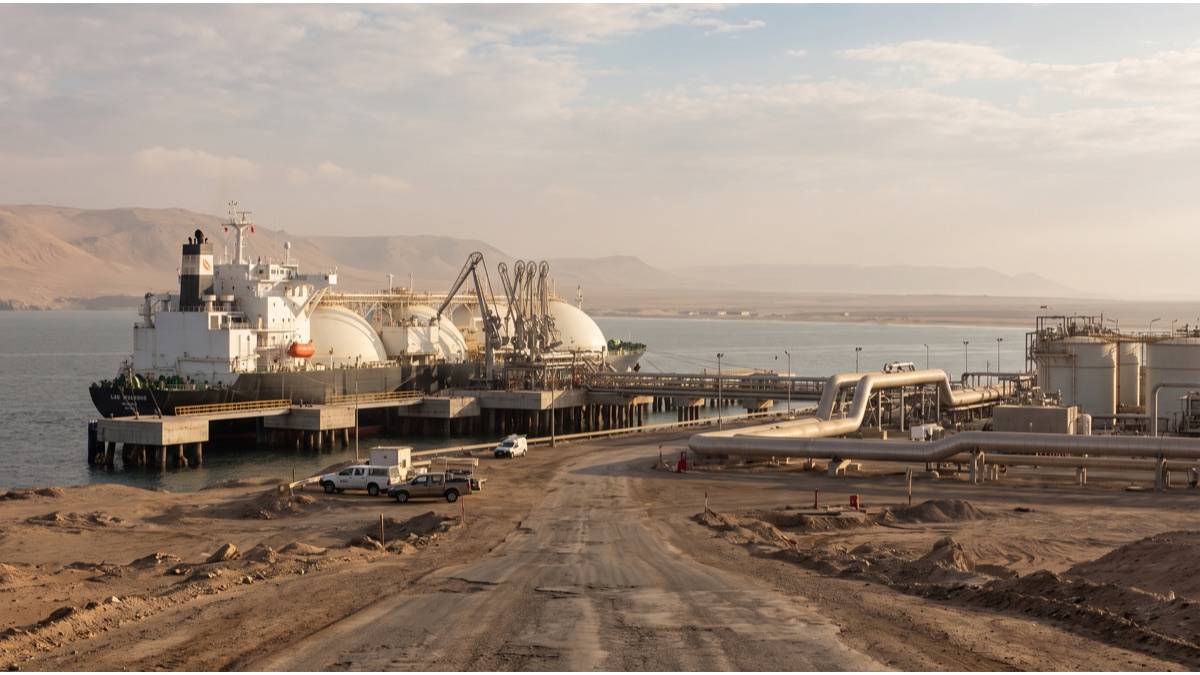
Egypt spent years importing natural gas to keep its own power plants running, then within a matter of years became a net exporter shipping liquefied gas to customers across Europe and Asia, before facing a domestic shortfall that briefly pushed it back toward importing again. That whiplash sequence is not a story of policy failure so much as a story of geology, infrastructure timing, and a domestic market that consumes gas at a genuinely enormous scale.
Understanding how Egypt's gas export system actually works means separating the offshore discovery that changed the country's trajectory, the liquefaction infrastructure that makes export physically possible, and the domestic demand pressures that periodically complicate the export picture even when production is strong.
From Net Importer to Exporter and Back Again
Egypt was once a modest gas exporter through the 2000s, but rising domestic consumption combined with production shortfalls at aging fields pushed the country into net importer status for a period in the mid-2010s, a reversal that coincided with real domestic electricity shortages and rolling blackouts.
The subsequent discovery and rapid development of new offshore gas resources reversed that trajectory again within just a few years, restoring Egypt to net exporter status and turning its two existing but underused LNG plants back into active export infrastructure.
This history matters because it illustrates how quickly Egypt's gas balance can shift in either direction, meaning any snapshot of Egypt as simply an "importer" or an "exporter" risks being outdated within a relatively short window given how tightly production and domestic demand run against each other.
Analysts covering the sector generally treat Egypt's net trade position as a rolling, seasonally adjusted figure rather than a fixed annual label, tracking monthly production, domestic offtake, and export cargo volumes separately, since collapsing all three into a single yearly net number can obscure meaningful swings that matter a great deal to anyone actually planning around Egyptian gas supply, whether a utility, a trading desk, or a government energy planner.
The Zohr Field Discovery That Changed Everything
The Zohr field, discovered offshore in Egyptian Mediterranean waters, is widely credited as the single development that reversed Egypt's gas trajectory, given both its scale and the unusually rapid pace at which it moved from discovery to production.
Zohr's development timeline, compressed to roughly two years from discovery to first gas, was considered fast even by the standards of major offshore gas projects globally, a pace that Egyptian officials and the field's international operators have both pointed to as a case study in accelerated project execution.
Beyond its own output, Zohr's success also encouraged further exploration investment across Egypt's Mediterranean waters, contributing to a broader pipeline of subsequent discoveries that have added to the country's total offshore gas reserves.
Zohr's discovery also carried a technical dimension that surprised much of the industry, since the field's carbonate reservoir formation was not the type of geology previously associated with major gas accumulations in that part of the Mediterranean, prompting exploration companies to revisit and reassess other Egyptian offshore blocks using the same geological insight that led to Zohr's discovery in the first place.
How LNG Terminals Actually Convert Gas for Export
Natural gas intended for export by ship must first be cooled to roughly minus 162 degrees Celsius, a process that shrinks its volume by more than 600 times and converts it into a transportable liquid known as liquefied natural gas, or LNG.
This liquefaction process happens at large coastal industrial plants that combine gas processing, refrigeration, and storage infrastructure, and it is genuinely capital-intensive and energy-intensive, meaning LNG export capacity cannot be added quickly or cheaply in response to short-term production increases.
Once liquefied, the gas is loaded onto specialized double-hulled LNG tankers built to maintain the cargo at cryogenic temperature for the duration of the voyage, and unloaded at destination terminals equipped to regasify it back into pipeline-ready gas for the receiving market.
The entire chain, from wellhead through processing, liquefaction, shipping, and regasification, requires close coordination between upstream production schedules and downstream shipping availability, since a liquefaction plant running below its feed-gas requirement wastes expensive fixed infrastructure, while a plant fed more gas than it can process simply cannot liquefy the surplus, making steady, predictable upstream supply just as important to a successful LNG export operation as the liquefaction technology itself.
Idku and Damietta: Egypt's Two LNG Plants
Egypt's two liquefaction plants sit at Idku and Damietta on the Mediterranean coast, both originally built years before the Zohr discovery to process gas from older fields, and both experienced a period of reduced or halted operation during Egypt's mid-2010s domestic gas shortfall.
As new offshore production came online, both plants were revived and returned to significant export activity, illustrating how existing but underused infrastructure can become strategically valuable again once the underlying gas supply picture changes.
The fact that Egypt already possessed this liquefaction infrastructure before the recent discoveries meaningfully shortened the country's path back to being a major LNG exporter, compared to a country that would have needed to build such capital-intensive plants from scratch.
Both plants also underwent technical upgrades and maintenance investment during their period of reduced activity, so that when domestic gas shortfalls eased and new offshore volumes became available, the facilities were able to ramp production back toward their original design capacity relatively quickly rather than requiring years of rebuilding, a factor that further shortened Egypt's return to significant export volumes.
Why Egypt Relies on Liquefied Rather Than Piped Exports
Unlike gas exporters connected to their customers by continuous pipeline, such as Russia's historical pipeline exports to parts of Europe, Egypt's main export customers sit across open sea, making LNG shipping the practical export method for reaching most of its international buyers.
Egypt does maintain some pipeline infrastructure and regional interconnections, but its LNG plants at Idku and Damietta represent the core export channel giving Egyptian gas access to a global customer base rather than a geographically fixed set of pipeline-connected neighbors.
This LNG-centric export model gives Egypt more flexibility in choosing which international markets to serve cargo by cargo, since LNG tankers can be redirected to whichever buyer is currently offering the best terms, unlike gas committed to a fixed pipeline route.
Why Egypt Sometimes Imports Gas While Exporting It
Egypt's domestic gas demand is enormous and highly seasonal, driven substantially by summer electricity consumption for air conditioning across a large and growing population, and that seasonal peak can outpace even strong domestic production at certain points in the year.
When this happens, Egypt has at times imported gas, including LNG cargoes purchased on the international spot market, specifically to feed domestic power generation, even while its own LNG plants continued fulfilling separate export contracts with international buyers.
This apparent contradiction, importing and exporting the same commodity in the same period, reflects the practical reality that domestic power plants and export LNG facilities are often supplied through different contractual and logistical arrangements rather than a single undifferentiated national gas pool.
Egypt's electricity regulator and gas ministry coordinate closely during peak summer months specifically to manage this balancing act, sometimes curtailing planned export cargoes or drawing on floating storage and regasification units chartered temporarily to add import capacity quickly without committing to permanent new infrastructure, a flexible response better suited to a seasonal demand spike than a long-term capacity expansion would be.
The Role of International Energy Companies
Major international oil and gas companies have played a central role in Egypt's offshore exploration and production, typically operating under production-sharing agreements with the Egyptian state that define how output and revenue are divided between the international partner and the government.
These partnerships bring the deepwater drilling technology, engineering expertise, and substantial upfront capital that offshore Mediterranean gas development requires, resources that would be considerably harder for Egypt's state energy sector to marshal alone at the same pace.
In return, international partners gain access to a share of production and, often, favorable long-term positioning in a gas basin considered one of the more significant offshore discoveries in the wider Mediterranean and Middle East region in recent decades.
Egypt's state gas company also plays a direct operational and commercial role alongside these international partners, holding equity stakes in specific fields and licensing blocks and acting as the counterparty for marketing arrangements, meaning the government participates in the upside of major discoveries directly as a producer rather than purely as a tax and royalty collector.
How Subsidized Domestic Prices Affect Export Incentives
Domestic gas prices in Egypt have historically been set by the government well below prevailing international market prices, a subsidy structure intended to keep electricity and industrial energy costs manageable for Egyptian consumers and businesses.
This price gap creates a real economic incentive structure, since gas sold domestically at subsidized rates generates meaningfully less revenue for producers than the same volume sold into the export market at international prices, an imbalance that policy and contractual arrangements must actively manage.
Egyptian authorities have periodically adjusted domestic energy pricing as part of broader economic reform programs, moves that affect not just consumer costs but also the underlying incentive balance between supplying the domestic market and directing gas toward more lucrative export contracts.
These pricing adjustments are politically sensitive, since gas-fired electricity underpins a large share of Egyptian households' energy bills and industrial input costs, meaning any move to close the gap between subsidized domestic pricing and international market rates has to be weighed carefully against the risk of public backlash and pressure on lower-income households already coping with broader cost-of-living increases across the economy.
Regional Gas Politics: Israel, Cyprus, and the East Mediterranean
Egypt's gas industry does not operate in isolation from its Eastern Mediterranean neighbors, and the region has seen a wave of offshore discoveries in Israeli and Cypriot waters alongside Egypt's own finds, creating both cooperative and competitive dynamics around regional gas infrastructure.
Egypt has established gas import and processing arrangements with Israel in particular, at times bringing Israeli gas into Egyptian territory partly for domestic use and partly for onward liquefaction and export through Egypt's existing LNG plants, leveraging infrastructure Israel itself lacks.
This regional interdependence has made Egypt something of a processing and export hub for East Mediterranean gas more broadly, a role that extends its strategic importance beyond its own domestic reserves alone.
Cyprus, for its part, has discussed similar arrangements to route its own offshore gas through Egyptian liquefaction facilities rather than building costly standalone infrastructure of its own, an option that would further cement Egypt's role as the region's processing chokepoint even for gas it does not itself produce, though the commercial and logistical terms of any such arrangement remain subject to ongoing negotiation among the parties involved.
Egypt's Ambition to Become a Regional Energy Hub
Egyptian officials have explicitly framed the country's LNG infrastructure and geographic position as an opportunity to become a broader regional energy hub, processing and exporting not just its own gas but gas from neighboring producers lacking equivalent liquefaction capacity.
This hub ambition has been reinforced through regional cooperation frameworks and bilateral agreements aimed at coordinating gas flows, pricing, and infrastructure investment across Eastern Mediterranean producers, positioning Egypt as a central node rather than simply one producer among several.
Achieving this hub role at real scale depends heavily on Egypt maintaining enough spare domestic supply and liquefaction capacity to reliably process third-party gas, a balance that becomes considerably harder during the periods when Egypt's own domestic demand is straining its production.
Egyptian officials have periodically discussed additional liquefaction capacity expansion, alongside pipeline interconnection upgrades with regional neighbors, as long-term investments intended to make the hub ambition durable across future demand cycles rather than dependent on any single field's output remaining strong, though the timeline and financing for such expansion projects have generally moved more slowly than the initial announcements suggested, a pattern common to large energy infrastructure investment worldwide.
Price Volatility and Long-Term Export Contracts
Global LNG prices are genuinely volatile, shaped by weather-driven demand swings, competing supply from other major exporters, and broader energy market disruptions, meaning the revenue Egypt earns per cargo can vary substantially from one shipment to the next depending on market conditions.
Egyptian LNG exports flow through a mix of long-term supply contracts with fixed or formula-based pricing and shorter-term spot market sales, a blend that balances revenue predictability against the ability to capture unusually favorable prices during periods of tight global supply.
This contract mix also affects how flexibly Egypt can redirect gas toward domestic use during a shortfall, since gas committed under firm long-term export contracts is considerably harder to divert than gas sold on the more flexible spot market.
Some of Egypt's long-term contracts include destination flexibility clauses and volume adjustment mechanisms that give both the buyer and Egypt some room to adapt cargo scheduling to changing conditions, a contractual feature that has become more common across the global LNG industry as exporters and buyers alike have sought to avoid the rigidity that characterized older-generation long-term gas supply agreements.
Common Misconceptions About Egypt's Gas Exports
A common misconception treats Egypt as a straightforward gas exporter comparable to major Gulf producers; in reality Egypt's own enormous and rapidly growing domestic consumption means its net export position has proven considerably more fragile and reversible than that of larger, less domestically-constrained exporters.
Another misconception assumes Egypt exports primarily through pipelines; in practice its Mediterranean geography and lack of extensive international pipeline connections make LNG shipping, not pipeline delivery, the dominant export method for reaching most international buyers.
A third misconception treats importing and exporting gas simultaneously as contradictory or as evidence of mismanagement; in practice this reflects the genuine operational reality of separate domestic and export supply chains responding to seasonal demand and contractual commitments that do not always align perfectly month to month.
A fourth misconception assumes Egypt's offshore gas reserves are effectively unlimited given the scale of recent discoveries; independent reserve estimates, while substantial, are finite and subject to normal production decline curves over time, which is precisely why continued exploration investment and the pace of new discoveries matter so much to whether Egypt's export capacity remains durable over the coming decade rather than a temporary peak driven by one or two exceptionally large fields.
Egypt's gas export story is ultimately one of genuine geological fortune, in the Zohr discovery and the fields that followed it, combined with infrastructure Egypt fortunately already possessed at Idku and Damietta, layered against a domestic demand base large and seasonal enough to periodically strain even strong production, and shaped further by a web of regional partnerships that few observers would have predicted a decade ago.
That combination explains why Egypt's status as exporter or importer has shifted meaningfully within a single decade, and why understanding its gas trade requires looking well beyond a single "net exporter" or "net importer" label toward the seasonal and contractual detail underneath it, and toward how much of that broader picture still depends on decisions made years earlier about where to drill, what infrastructure to build, and which international partners to build it with.
Sources
- U.S. Energy Information Administration — country-level natural gas production, consumption, and trade data.
- International Energy Agency — global gas market analysis and LNG trade statistics.
- Egyptian Natural Gas Holding Company (EGAS) — official Egyptian gas sector data and project information.
- World Energy Outlook, IEA — long-term global energy and gas trade projections.
- Wikipedia — overview of the Zohr field discovery and development.
FAQ
What is the Zohr gas field?
Zohr is a large natural gas field discovered offshore in Egyptian Mediterranean waters, whose rapid development from discovery to production is widely credited with turning Egypt back into a net gas exporter.
How does Egypt actually export its natural gas?
Egypt exports gas mainly as liquefied natural gas, cooled to a liquid state at coastal LNG plants and loaded onto specialized tankers, since it has limited direct pipeline connections to distant international customers.
Why does Egypt sometimes import gas while also exporting it?
Seasonal domestic demand, particularly summer electricity use for air conditioning, can outpace production at certain points, prompting Egypt to import gas for domestic power generation even while its LNG plants continue serving export contracts.
What are Egypt's two LNG export terminals called?
Egypt's two liquefaction plants are located at Idku and Damietta on the Mediterranean coast, both built years before Zohr's discovery and later revived to process gas from newer offshore fields.
Does subsidized domestic gas pricing affect Egypt's exports?
Yes. Domestic gas prices in Egypt have historically been set well below international market levels, which affects how much gas producers are incentivized to direct toward the more profitable export market versus subsidized domestic supply.
About the Author
We reference the U.S. Energy Information Administration, International Energy Agency, Egyptian Natural Gas Holding Company, and Wikipedia to explain the background and current understanding of this topic.
Loved This Article?
Share it on WhatsApp → Share it on WhatsApp
Get more guides in your inbox — Subscribe to our newsletter for weekly surprising stories from Egypt, Saudi Arabia, Dubai, and beyond.