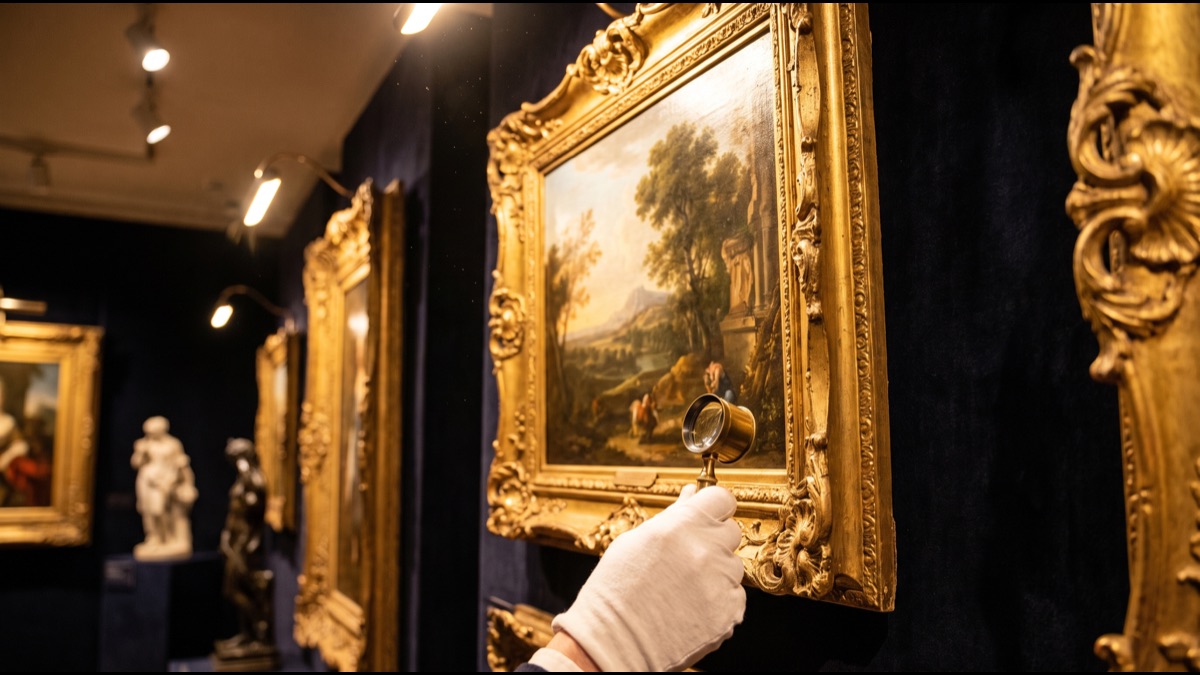
A painting has no barcode and no fixed retail price. Two qualified appraisers looking at the same canvas can reasonably arrive at figures that differ by a meaningful margin, and yet an insurer still has to write a specific number into a policy, a tension that shapes an entire specialist industry built around estimating what is, in the end, an inherently uncertain quantity.
Why Fine Art Insurance Is a Genuinely Different Problem
Standard property insurance works reasonably well for goods with an active resale market and comparable replacement units, a car or a refrigerator can be priced against thousands of similar units sold recently. A one-of-a-kind painting has no such market of interchangeable comparables, since by definition only one physical original exists.
This uniqueness means value must be estimated rather than simply looked up, drawing on a combination of the artist's broader market, the specific work's history, and professional judgment about how collectors would likely respond if the piece came up for sale, a fundamentally different exercise from pricing a commodity good.
Fine art policies are consequently written as a distinct specialist category, often called a fine art floater or scheduled personal property endorsement, separate from a standard homeowner's policy, precisely because general insurers lack the expertise to price this kind of risk accurately on their own.
The stakes of getting this valuation wrong run in both directions. An underinsured collection leaves an owner exposed to genuine financial loss after a catastrophic event, while a significantly overinsured one can invite scrutiny from an insurer during a claim, since insurers are alert to the possibility of value being inflated specifically to secure a larger eventual payout.
Who Actually Performs an Art Appraisal
Qualified art appraisers typically hold accreditation from a recognized professional body, and specialize narrowly, an appraiser competent to value Islamic manuscripts is not automatically qualified to value contemporary photography, since each specialization requires deep familiarity with a distinct market and body of comparable sales.
A formal appraisal report documents the physical work in detail, including medium, dimensions, condition, and any distinguishing marks, alongside the reasoning behind the assigned value, creating a paper trail an insurer, and later a claims adjuster, can actually examine rather than simply trusting a single figure.
Independence matters considerably here: insurers generally prefer appraisals from a party with no financial stake in the eventual sale of the work, which is why a dealer's own asking price is treated with more skepticism than a report from an appraiser retained specifically and only for valuation purposes.
Larger insurers and major auction houses maintain in-house valuation teams for exactly this reason, while collectors and smaller institutions more often engage an independent appraiser directly, and either route is generally acceptable to an underwriter provided the appraiser's credentials, specialization, and independence can be clearly demonstrated on request.
How Comparable Sales Data Shapes a Value
Public auction results form the single most influential data source available to an appraiser, since a recorded hammer price for a genuinely comparable work by the same artist, from a similar period and in similar condition, provides concrete market evidence rather than pure estimation.
Appraisers adjust these comparables for differences in size, subject matter, condition, and the specific period of an artist's career the work represents, since even within one artist's output, certain years or subjects command meaningfully higher prices than others based on established collector preference.
Private sales complicate this picture considerably, since a substantial share of high-value art transactions occur privately between dealers, collectors, or through gallery sales and are never publicly recorded, meaning the visible auction record is a genuine but incomplete window into the true state of a market.
Appraisers partly compensate for this gap by drawing on trade relationships and subscription databases that aggregate confidential dealer transaction data alongside the public auction record, though even the best of these sources still under-represent the very top and very bottom of the market, where deals are struck quietly and rarely disclosed in any systematic way.
Why Authentication Comes Before Any Number
No meaningful valuation can proceed until a work's attribution is reasonably settled, since the difference between a painting confidently attributed to a major artist and one merely in that artist's style or studio can represent a difference of many multiples in value.
Authentication typically draws on connoisseurship, expert visual analysis of technique and materials, alongside scientific methods including pigment analysis, infrared reflectography to examine underdrawing, and dendrochronology for wood panels, each adding independent evidence toward or against a proposed attribution.
Disputed attribution is common enough in the market that insurers routinely write coverage on works described honestly as attributed, circle of, or after a named artist, at valuations reflecting that uncertainty rather than the confident premium a fully authenticated original by the master's own hand would command.
How Condition and Restoration History Affect Value
Physical condition is assessed in detail during appraisal, examining craquelure, past flaking, discoloration from aged varnish, and any structural issues with the canvas or panel support, since condition problems can meaningfully depress value even when authorship is not in question.
Well-documented, professionally executed restoration is generally viewed as neutral to positive by the market, since it demonstrates the work has been properly cared for, while undisclosed or poorly executed past restoration discovered later can significantly damage both value and buyer confidence.
This is why serious appraisers routinely request or commission a conservation report alongside the visual appraisal itself, treating condition documentation as inseparable from an honest valuation rather than a secondary consideration to be addressed only after a number has already been assigned.
Condition assessment also feeds directly into premium pricing, not just claim value, since a work already carrying documented structural weakness is a genuinely higher underwriting risk than an identical piece in stable condition, and insurers will sometimes require specific conservation work as a condition of continued coverage rather than simply pricing the existing risk into the premium.
Why Provenance Can Swing a Valuation Sharply
Provenance, the documented ownership history of a specific work, functions simultaneously as evidence supporting authentication and as a value driver in its own right, since a documented chain connecting a painting to a notable prior collection can meaningfully increase what collectors are willing to pay.
Gaps in provenance, particularly periods with no documented ownership, raise both authentication concerns and legal risk, since an undocumented gap can obscure a period during which a work was looted, stolen, or exported in violation of cultural property law, any of which can later cloud legitimate title.
Appraisers factor this risk directly into valuation, discounting works with unresolved provenance gaps to reflect both the practical difficulty of eventual resale and the genuine possibility that a claim against the work could surface at any point after insurance has already been written.
How Scheduled Value Coverage Actually Works
Most fine art policies use scheduled value coverage, meaning each individual work is listed on the policy at an agreed value based on the submitted appraisal, rather than being covered generically as part of an undifferentiated household contents sum.
This structure benefits both parties in principle: the owner knows in advance what a total loss would pay out, and the insurer avoids the ambiguity of estimating an unlisted item's value only after a loss has already occurred and precise assessment has become far harder.
However, most policies pay the lesser of the scheduled amount and the actual market value determined at the time of loss, meaning a stale appraisal reflecting an outdated, lower market does not automatically guarantee the higher scheduled figure will be paid in full.
A smaller number of specialist policies instead offer agreed-value coverage, under which the insurer commits in advance to pay the full scheduled figure on a total loss regardless of what the market has done since underwriting, an arrangement that typically commands a meaningfully higher premium precisely because it shifts more of the valuation risk from owner to insurer.
Why Museums Need Different Coverage Than Collectors
Institutional collections require standing coverage for a permanent collection much like a private collector, but layer on exhibition and loan coverage, known in the industry as nail-to-nail coverage, protecting a work continuously from the moment it leaves its home institution's wall until it returns.
This transit exposure is genuinely significant, since works are statistically at meaningfully higher risk of damage during packing, shipping, and handling than while hanging securely in a controlled gallery environment, which is reflected directly in the higher premium loan coverage commands relative to standing coverage alone.
Lending institutions frequently require borrowing museums to carry adequate coverage as a contractual condition of any loan agreement, meaning a major touring exhibition depends as much on careful insurance arrangement behind the scenes as on the curatorial and logistical planning visitors never see.
Government indemnity schemes exist in several countries specifically to make blockbuster loan exhibitions financially feasible, since the state effectively underwrites a portion of the exhibition's insurance exposure, allowing museums to borrow works whose combined insured value would otherwise make a full commercial policy prohibitively expensive for a limited-run public exhibition.
How Climate and Storage Risk Get Priced In
Organic materials in a painting, canvas, wood panel, natural pigments, and varnish, are all sensitive to humidity and temperature fluctuation, which is why insurers increasingly ask about a collection's storage and display environment as part of underwriting rather than treating all locations as equivalent risk.
A climate-controlled gallery with stable humidity and filtered light represents meaningfully lower risk than a private home with ordinary seasonal temperature swings, and premiums are adjusted accordingly, occasionally with specific conditions attached requiring documented environmental controls to maintain coverage.
Increasingly, insurers also factor in broader climate risk to a property's location itself, including flood and wildfire exposure, since a growing pattern of major art losses in recent years has come not from theft but from water damage and fire connected to increasingly severe weather events.
What Happens When a Claim Is Actually Filed
Following a loss, an insurer typically commissions its own independent appraisal rather than relying solely on the value submitted at the time the policy was written, particularly for any claim involving significant sums or where meaningful time has passed since the original appraisal.
For a total loss, this reconciliation process determines the actual payout within the scheduled coverage limit, while for partial damage, the claim instead centers on the cost of professional restoration and any residual diminished value the work retains even after expert conservation work is completed.
Diminished value claims are a genuinely contested area of art insurance, since even flawlessly restored damage can measurably reduce what a knowledgeable buyer will pay compared to an identical undamaged work, a loss some policies compensate explicitly and others do not cover at all.
Theft claims add a further layer of complexity, since a payout typically does not close the file the way a settled damage claim does; insurers commonly retain subrogation rights and continue working with registries such as the Art Loss Register in case the stolen work eventually resurfaces, at which point ownership and any prior payout must be reconciled.
Why Reappraisal Is Required So Often
Art markets move considerably faster than most tangible asset markets, an artist's reputation and pricing can shift meaningfully within a few years following a major museum retrospective, critical reassessment, or a headline-making auction result for a comparable work.
Most specialist policies consequently require reappraisal every three to five years as standard practice, and sophisticated collectors often commission updates sooner following any individual event likely to have moved the specific artist's market meaningfully in either direction.
Failing to update a stale appraisal carries genuine financial risk on both sides: undervaluation leaves an owner underinsured against a rising market, while an outdated high valuation in a market that has since cooled can create an unwelcome and confusing surprise for everyone at claim time.
Why the System Still Produces Genuine Disagreement
Even with rigorous methodology, appraisal inherently involves professional judgment applied to incomplete and imperfect information, meaning reasonable, well-qualified experts genuinely can and do reach different conclusions about the same work without either being straightforwardly wrong.
This is precisely why serious collectors and institutions commission appraisals from established, independent, and accountable professionals rather than treating any single number as objective fact, understanding the resulting figure as a carefully reasoned estimate rather than a definitively correct answer.
Seen this way, art insurance is less a mechanical pricing exercise and more a structured negotiation between market evidence, expert judgment, and genuine uncertainty, one that produces a workable number precisely because every party involved accepts that a perfectly objective figure for a unique object was never actually available to begin with.
Sources
- Wikipedia — overview of art valuation methods and the professional appraisal industry
- Appraisers Association of America — professional standards for fine art appraisal
- Art Loss Register — provenance and stolen art documentation used in valuation and due diligence
- International Foundation for Art Research — authentication research and provenance verification resources
- Lloyd's of London — historical background on specialist fine art insurance underwriting
FAQ
How often does an insured painting need to be reappraised?
Most specialist policies require a fresh appraisal every three to five years, or sooner following a significant shift in an artist's market or a major sale of comparable work.
Does an art insurance payout equal the appraised value?
Not automatically — most policies pay the lesser of the scheduled value and the actual market value at the time of loss, so a stale high appraisal does not guarantee that full sum.
Why do museums need different coverage than private collectors?
Museums require exhibition and loan coverage for works in transit and on temporary display, on top of standing collection coverage, a combination private collectors rarely need.
Can an unauthenticated painting be insured?
Insurers can write coverage on attributed or disputed works, but typically at a steep discount to the value a fully authenticated piece by the same hand would command.
Does restoration affect a painting's insured value?
Yes — well-documented, expert restoration is generally viewed favorably, while poor or undisclosed past restoration work can meaningfully reduce an appraiser's assessed value.
About the Author
We reference Wikipedia, the Appraisers Association of America, the Art Loss Register, the International Foundation for Art Research, and Lloyd's of London to explain the background and current understanding of this topic.
Loved This Article?
Share it on WhatsApp → Share it on WhatsApp
Get more guides in your inbox — Subscribe to our newsletter for weekly surprising stories from Egypt, Saudi Arabia, Dubai, and beyond.