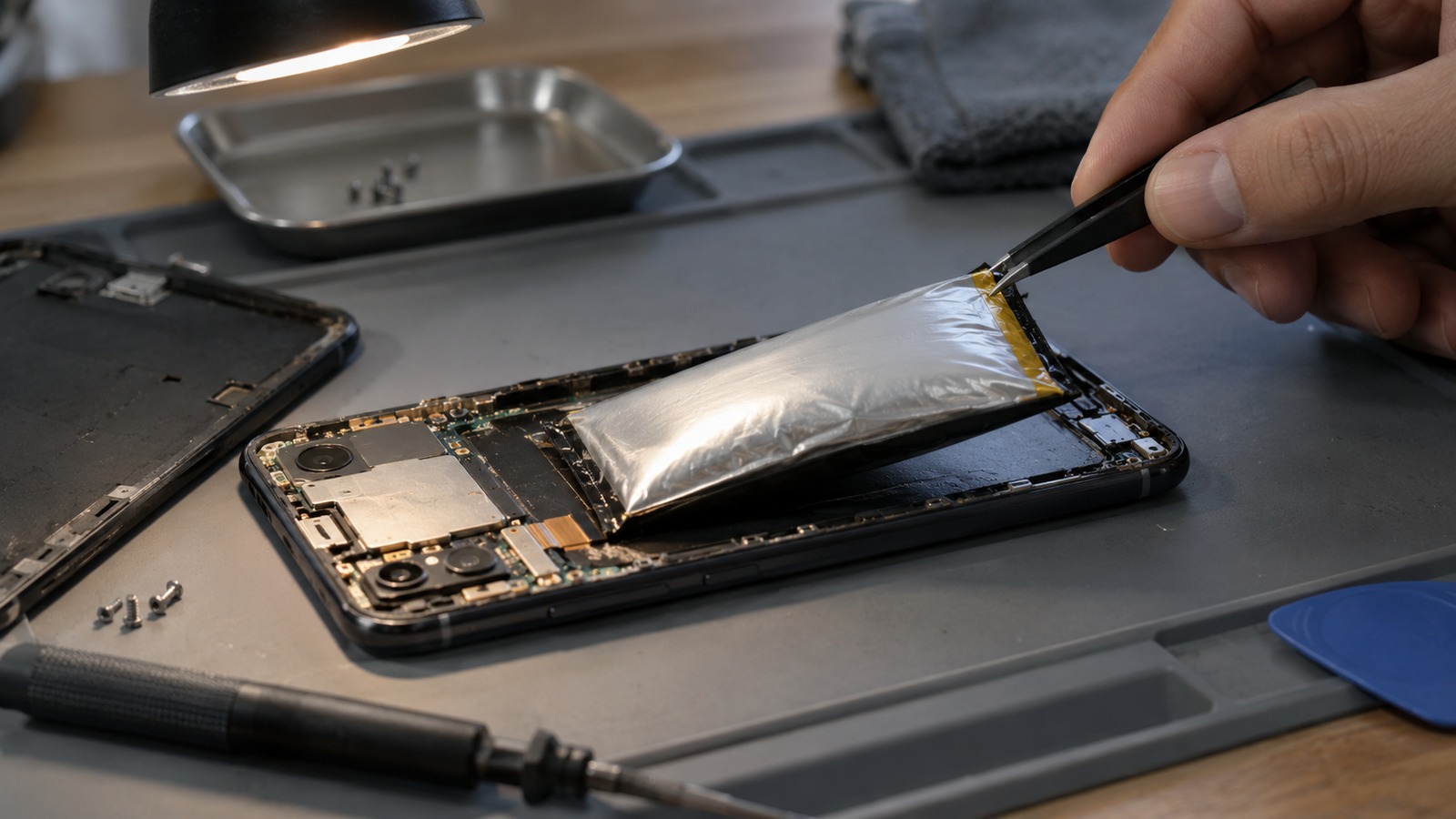
A two-year-old phone that once comfortably lasted a full day on a single charge often struggles to make it to dinner, and the culprit is rarely a software problem — it is the battery itself quietly losing capacity with every charge cycle. This decline is not a manufacturing defect or a conspiracy to force upgrades; it is a predictable, well-documented consequence of the chemistry that makes lithium-ion batteries possible in the first place. Understanding what is actually happening inside that sealed cell explains why degradation is unavoidable, why some charging habits make it noticeably worse, and which precautions genuinely extend a battery's useful life versus which ones are folk wisdom with little evidence behind them.
What 'Battery Degradation' Actually Means
Battery degradation refers to the gradual, permanent loss of a battery's maximum charge capacity over time, meaning a battery that once held 100% of its rated charge might only hold 80% after a few years of typical use, even though it still charges and discharges normally.
This is different from a battery simply running low during the day, which is a temporary state that resets with every charge; degradation is a ceiling that slowly lowers, so a fully charged two-year-old phone genuinely holds less usable energy than the same phone did when new.
Apple, Samsung, and other manufacturers now build battery health reporting directly into their operating systems specifically because this decline is universal across all lithium-ion devices, not a flaw specific to any one brand or model.
Inside a Lithium-Ion Cell: Ions Moving Between Electrodes
A lithium-ion battery stores energy by moving lithium ions between two electrodes — a cathode and an anode — through a liquid or gel electrolyte, with the ions flowing one direction during charging and the opposite direction during discharge to power the phone.
This ion movement is what makes rechargeable lithium-ion chemistry so useful compared to older disposable battery technology, but the same physical movement that makes charging possible also gradually and irreversibly changes the structure of the electrode materials with each cycle.
Researchers studying battery chemistry, including work published through institutions like the U.S. Department of Energy's national laboratories, describe this as an inherent tradeoff of the technology rather than a solvable engineering oversight, since the mechanism that stores energy is the same mechanism that wears the cell down.
Why Every Charge Cycle Causes a Little Permanent Wear
Every time a battery goes through a full charge cycle — using 100% of its capacity, whether in one sitting or spread across several partial charges — a small amount of the lithium available to move between electrodes becomes chemically 'stuck' and unavailable for future cycles.
This is not a sudden failure but a cumulative, gradual process, which is why battery health tends to decline slowly and predictably over hundreds of cycles rather than dropping sharply after any single charging session.
Manufacturers typically rate batteries for a specific number of charge cycles, often around 500 to 1,000 for modern smartphones, before capacity is expected to fall to roughly 80% of its original rating, though real-world results vary with usage patterns and conditions.
Solid Electrolyte Interphase: The Layer That Slowly Grows
A microscopically thin layer called the solid electrolyte interphase (SEI) forms on the anode as a natural byproduct of the battery's chemistry, and while a stable SEI layer is actually necessary for the battery to function safely, it continues to slowly thicken with continued use.
As this layer thickens over time, it increasingly restricts the flow of lithium ions and consumes some of the lithium that would otherwise be available for storing charge, which researchers identify as one of the primary mechanisms behind long-term capacity loss.
This process happens even in a battery that is never used, simply sitting in storage, which is part of why an unused phone left in a drawer for years still shows meaningfully reduced battery health when eventually powered on.
Why Heat Is the Single Biggest Accelerant of Degradation
Heat dramatically accelerates the chemical reactions that degrade a lithium-ion battery, including SEI layer growth, meaning a phone regularly exposed to high temperatures — left in a hot car, used heavily while charging, or run in direct sunlight — will typically show faster capacity loss than an identical phone kept cooler.
Apple's own published guidance states that ambient temperatures above roughly 35°C (95°F) can permanently reduce battery capacity, and this kind of manufacturer guidance is broadly consistent with independent battery research on lithium-ion thermal sensitivity.
This is why heavy phone use while fast-charging in a hot environment is considered a particularly harsh combination for battery longevity, since it stacks two separate stress factors — elevated internal temperature and rapid ion movement — at the same time.
Why Keeping a Phone at 100% Charge Stresses the Battery
Keeping a lithium-ion battery at or near 100% charge for extended periods places it under higher voltage stress than keeping it in a mid-range state of charge, and this elevated voltage is understood to accelerate the same chemical degradation processes that normal cycling causes more gradually.
This is why battery researchers and manufacturers commonly recommend keeping a phone's charge between roughly 20% and 80% for optimal long-term health when possible, rather than habitually charging fully to 100% and leaving it there overnight.
The effect is measurable but gradual, meaning an occasional full charge for a long day of travel is not meaningfully harmful; the concern is specifically about a battery spending large amounts of cumulative time sitting at a full or near-full charge state.
Why Fully Draining a Battery Is Also Harmful
Fully draining a lithium-ion battery to 0% is also stressful for the cell, since very low charge states can allow damaging chemical reactions at the electrodes and, in extreme or repeated cases, can push the battery into a deeply discharged state that is harder for the charging circuitry to safely recover.
Modern smartphones include protective circuitry that prevents the battery from being discharged to a truly dangerous level even when the screen shows 0%, but frequently allowing a battery to reach that low point still accelerates measurable long-term wear compared to charging before it gets that low.
This is part of why battery guidance from manufacturers consistently frames the ideal usage pattern as frequent partial charges within a moderate range, rather than the older 'fully drain before recharging' advice that applied to a different, now largely obsolete battery chemistry.
Fast Charging: Convenience Traded for Extra Wear
Fast charging pushes a higher current into the battery to reduce charging time, and that higher current generates more heat and places more physical stress on the electrode materials than a slower charge delivering the same total energy over a longer period.
Most manufacturers design fast-charging systems to automatically slow down as the battery approaches full capacity specifically to limit this stress, which is why charging speed noticeably drops after roughly 80%, a design choice made for battery longevity rather than a technical limitation.
Using fast charging occasionally for convenience is unlikely to cause meaningful extra wear, but relying on it as the default charging method for every single charge is generally understood to contribute to somewhat faster capacity loss over the device's lifetime.
How Manufacturers Define and Report 'Battery Health'
Modern smartphones estimate 'battery health' or 'maximum capacity' as a percentage by comparing the battery's current maximum charge capacity against its original factory-rated capacity, giving users a rough but genuinely informative proxy for how much degradation has occurred.
This figure is an estimate derived from the phone's internal charging circuitry and software algorithms rather than a direct physical measurement taken with laboratory equipment, so it can vary slightly between devices or fluctuate modestly, though the general trend it reports is considered reliable.
Apple, Samsung, and Google all now surface this metric somewhere in their device settings, reflecting industry-wide acknowledgment that consumers reasonably want visibility into a component that degrades but typically cannot be easily swapped out by the user.
Charge Cycles vs. Calendar Age: Two Separate Clocks
Battery wear is driven by two largely independent factors: the number of charge cycles completed, and simple calendar time passing, since the chemical aging processes like SEI layer growth continue slowly even when a battery sits unused and uncharged.
This means two identical phones can show different battery health after the same number of months if one was charged and used heavily while the other sat mostly idle, but it also means an old, barely used phone will still show some degradation purely from age.
Manufacturers' cycle-based degradation estimates assume typical usage patterns, which is why actual results for any individual phone can differ meaningfully from the generic curve shown in marketing materials or support documentation.
Why Software Updates Can Change Perceived Battery Life
Operating system updates occasionally change how aggressively a phone manages background processes, screen brightness, or charging behavior, which can shift how long a battery of a given health percentage actually lasts through a typical day, sometimes creating the impression of sudden battery decline that is really a software change.
Some manufacturers have also shipped updates that deliberately throttle processor performance on phones with significantly degraded batteries, a measure intended to prevent unexpected shutdowns caused by an aging battery being unable to supply peak current, though this practice has drawn criticism for being introduced without sufficiently clear user disclosure in some cases.
This history is part of why independent right-to-repair advocates and regulators in several markets have pushed for clearer battery health disclosure and easier battery replacement options, treating battery degradation as a foreseeable lifecycle issue rather than an unexpected failure.
Optimized Charging Features and What They Actually Do
Features like Apple's 'Optimized Battery Charging' and similar systems from Samsung and Google use machine-learning predictions of a user's typical charging routine to delay the final portion of a charge until shortly before the phone is normally unplugged, reducing the total time spent sitting at 100%.
This approach targets the specific mechanism described earlier — high-voltage stress from prolonged full charge — without requiring the user to manually manage charging habits, and it is generally regarded by battery researchers as a genuinely useful, evidence-based longevity feature rather than a marketing gimmick.
These systems typically need a period of learning a user's routine to work effectively, which is why battery-health benefits from optimized charging tend to become more noticeable after the feature has had consistent data to work from for several weeks.
Why Extreme Cold Also Temporarily Reduces Capacity
Cold temperatures reduce a lithium-ion battery's ability to deliver current efficiently, which is why phone battery percentage can appear to drop unusually fast in freezing weather, but this specific effect is largely temporary and the displayed capacity typically recovers once the phone warms back up.
This differs meaningfully from heat damage, which causes permanent chemical degradation; cold exposure mostly affects the battery's short-term performance rather than its long-term maximum capacity, though manufacturers still generally advise against charging a phone while it is extremely cold, since that specific combination can cause lasting damage.
This distinction — cold as a temporary performance issue versus heat as a permanent degradation accelerant — is one of the more commonly misunderstood aspects of battery care among everyday phone users.
Battery Replacement Programs and When They Make Sense
Manufacturers including Apple and Samsung offer official battery replacement services, often at a set price for phones outside of warranty coverage, which can restore a device's battery health to close to 100% without requiring a full device upgrade.
Independent repair shops and, increasingly, user-replaceable battery kits offer lower-cost alternatives, though the appropriate choice depends on the specific phone model's repairability, the availability of genuine or high-quality replacement cells, and whether the replacement affects features like water resistance certification.
Battery replacement generally becomes worthwhile once reported battery health drops to a range that noticeably affects daily usability, commonly cited as somewhere below 80%, though the right threshold is ultimately a personal judgment based on how the reduced capacity affects an individual's actual daily routine.
Practical Habits That Genuinely Slow Degradation
Keeping charge levels roughly between 20% and 80% when practical, avoiding leaving a phone charging to 100% overnight every night, and avoiding prolonged exposure to high heat are the three habits most consistently supported by battery research as genuinely slowing long-term degradation.
Using optimized or adaptive charging features when available, removing thick cases that trap heat during fast charging or heavy use, and avoiding unnecessary fast charging for routine top-ups are secondary habits that provide a smaller but still measurable benefit.
None of these habits prevent degradation entirely — the underlying chemistry guarantees some capacity loss over time regardless of how carefully a battery is treated — but consistently following them can meaningfully extend the period before a battery's reduced capacity becomes noticeably disruptive.
Why No Battery Lasts Forever, Regardless of Habits
Even a battery charged perfectly according to every best practice will still lose some capacity over years of calendar time, because processes like SEI layer growth continue at a slow baseline rate driven by chemistry and temperature rather than solely by how the device is used.
This is why manufacturers frame battery health guidance around slowing degradation rather than preventing it entirely, and why every lithium-ion battery, in every device from phones to laptops to electric vehicles, is understood to have a finite useful lifespan regardless of how it is cared for.
Framed this way, phone battery decline is less a flaw to be fixed than a predictable cost of the chemistry that makes modern portable electronics possible in the first place, one that good habits can meaningfully delay but never fully eliminate.
Phone batteries degrade because the same lithium-ion movement that stores and delivers energy also gradually and irreversibly changes the electrode materials with every cycle, a process accelerated by heat, high-voltage stress from staying near 100% charge, and simply the passage of calendar time. None of this reflects a defect or a deliberate design against consumers; it is a well-documented characteristic of the battery chemistry that also makes lightweight, high-capacity rechargeable devices possible in the first place. Habits like avoiding extreme heat, keeping charge in a moderate range when convenient, and using built-in optimized-charging features can meaningfully slow this decline, but no combination of good habits stops it entirely — eventually, every lithium-ion battery reaches the point where replacement, not better habits, is the only real fix.
Sources
- U.S. Department of Energy — Federal research on lithium-ion battery chemistry and degradation mechanisms.
- Apple Battery and Performance Support — Manufacturer guidance on lithium-ion battery health, charging, and temperature effects.
- National Renewable Energy Laboratory — Research on battery lifespan, cycling, and degradation factors.
- Consumer Reports — Independent testing and consumer guidance on device battery longevity.
FAQ
Does charging my phone overnight ruin the battery?
Occasional overnight charging is not seriously harmful, but consistently leaving a phone at 100% for hours every night contributes to faster long-term degradation, which is why optimized-charging features that delay the final charge portion are useful.
Is it true you should never let your phone battery hit 0%?
Fully draining a battery repeatedly does add stress, though modern phones have protective circuitry preventing truly dangerous discharge. Keeping charge generally between 20% and 80% is better for long-term health than habitually running to empty.
Does fast charging damage phone batteries faster than regular charging?
Fast charging generates more heat and stress than slower charging, and relying on it exclusively can contribute to somewhat faster wear, though occasional fast charging for convenience is not considered seriously harmful.
What percentage counts as 'bad' battery health?
There's no universal cutoff, but many users notice meaningfully reduced daily usability once reported battery health drops below roughly 80%, which is commonly cited as a reasonable point to consider a replacement.
Does cold weather permanently damage a phone battery?
Not usually. Cold temporarily reduces how efficiently a battery delivers current, causing the percentage to drop faster in freezing conditions, but capacity typically recovers once the phone warms up, unlike the permanent damage heat can cause.
About the Author
We reference the U.S. Department of Energy, Apple's official battery support documentation, the National Renewable Energy Laboratory, and Consumer Reports to explain the background and current understanding of this topic.
Loved This Article?
Share it on WhatsApp → Share it on WhatsApp
Get more guides in your inbox — Subscribe to our newsletter for weekly surprising stories from Egypt, Saudi Arabia, Dubai, and beyond.