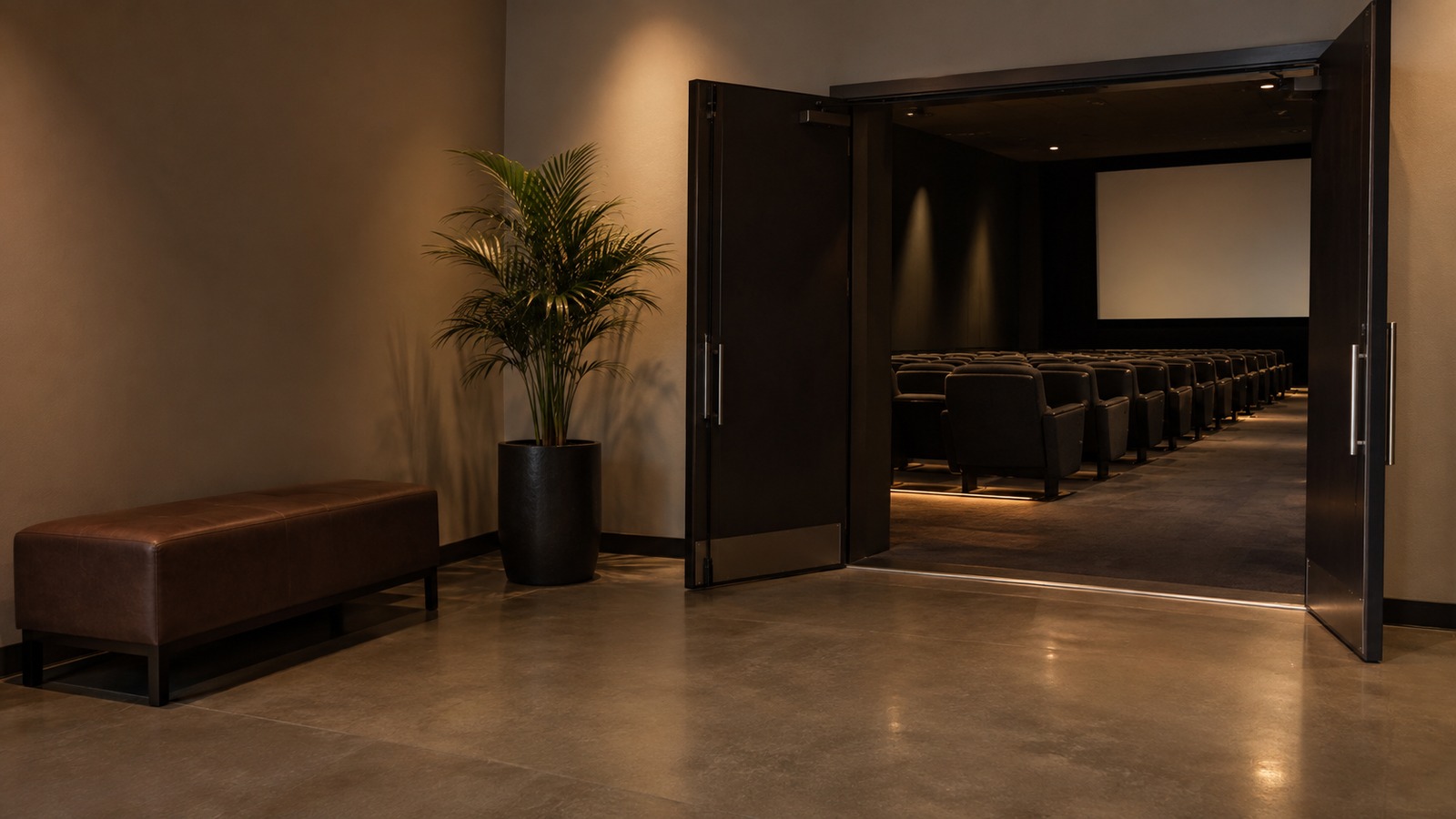
For roughly 35 years, walking into a public movie theater inside Saudi Arabia was simply not a legal option, regardless of what film was showing or where in the country you happened to be. That changed abruptly in April 2018, when the first commercial cinema in decades opened its doors in Riyadh, and within a few years the country had gone from zero legal movie screens to one of the fastest-growing cinema markets anywhere in the world.
The story of how that ban started, why it persisted for so long, and what actually drove its reversal says a great deal about the broader social and economic shifts underway in Saudi Arabia, and it is considerably more complicated than a single decree simply switching the policy on or off.
How the Ban Actually Started
Public cinemas did exist in Saudi Arabia earlier in the twentieth century, operating in a limited way in some cities, but they were shut down in the early 1980s amid a period of rising religious conservatism following the 1979 seizure of the Grand Mosque in Mecca, an event that pushed the government toward stricter social policy across multiple areas of public life.
Religious authorities at the time argued that mixed-gender public entertainment venues, including cinemas, were inconsistent with prevailing interpretations of Islamic social norms, and the government of the era, seeking to reassert religious legitimacy after the Mecca crisis, closed the theaters rather than defend their continued operation.
The ban was never codified as a single explicit law banning cinema by name in every instance; rather, it operated through a combination of licensing refusals, zoning barriers, and informal religious-authority pressure that made it practically impossible for anyone to legally operate a commercial movie theater for the following three and a half decades.
Life Without Legal Cinemas
The absence of public theaters did not mean Saudis stopped watching films. Home video, and later satellite television and streaming, filled much of the gap, and a genuine underground culture of private film screenings existed in some compounds and private venues, operating in a legal gray area that authorities largely tolerated as long as it stayed out of public view.
Saudis with the means to travel frequently crossed into neighboring Bahrain or the UAE specifically to watch films in a proper theater, turning weekend trips abroad into a minor but real driver of regional tourism spending that flowed directly out of the Saudi economy and into its neighbors.
This gap also shaped domestic film culture in an unusual way: a generation of Saudi filmmakers developed skills and told stories almost entirely outside any domestic exhibition infrastructure, submitting work to international festivals since there was no local theatrical circuit that could screen it at home.
The Social Shift That Preceded the Reversal
The reversal of the cinema ban did not happen in isolation. It arrived as part of a broader package of social liberalization measures under the Vision 2030 reform program, which also included lifting the driving ban on women, easing gender-segregation rules in some public spaces, and expanding public entertainment options more generally.
Government messaging around these changes consistently framed them as economic and social modernization rather than as a religious reinterpretation, positioning cinema reopening alongside other entertainment investments as part of a deliberate strategy to diversify the economy and improve quality of life, both explicit pillars of the Vision 2030 plan.
Public opinion research and informal social signals in the years leading up to 2018 suggested substantial pent-up domestic demand for legal entertainment options, particularly among younger Saudis, who make up a large share of the population and had grown up with far greater exposure to global media than earlier generations.
The Economic Case for Reopening Cinemas
Entertainment spending that Saudis were already directing abroad, whether on cinema trips to neighboring countries or on other leisure activities, represented capital leaving the domestic economy entirely, and reformers explicitly identified capturing that spending domestically as a concrete economic goal of the reopening.
Beyond direct box office revenue, a domestic cinema industry creates jobs across construction, retail, hospitality, and eventually local film production and distribution, fitting into the government's broader push to reduce dependence on oil revenue by building out entirely new commercial sectors from scratch.
Real estate developers and mall operators had additional incentive to support the change, since a cinema is a powerful anchor tenant that drives foot traffic to surrounding retail and food outlets, meaning the economic case extended well beyond the film industry itself into the broader commercial property sector.
April 2018: How the First Legal Screening Actually Happened
The formal reopening was handled as a high-profile national event rather than a quiet regulatory change, with a temporary cinema set up in Riyadh screening a major Hollywood blockbuster to an invited audience that included government officials, signaling clearly that this was an officially sanctioned, government-championed initiative rather than a grudging concession.
Licensing authority for commercial cinemas was placed under a newly created regulatory body specifically established to oversee the entertainment sector, reflecting the government's approach of building dedicated institutional infrastructure around each major new social and economic initiative rather than folding it into existing ministries.
International cinema chains were invited to bid for licenses to build and operate multiplexes across the country, a deliberate choice to bring in established international operational expertise rather than attempting to build a domestic exhibition industry from a standing start with no recent institutional experience.
Building an Industry From Zero
Constructing a nationwide cinema circuit essentially from scratch required solving problems that mature markets take for granted, including training a local workforce in projection, concessions, and theater management, and establishing supply chains for everything from digital projection equipment to popcorn machines.
International operators brought established playbooks for multiplex design and operation, but had to adapt aspects of that playbook to local expectations, including prayer-time accommodations in scheduling and, in the early period, continued attention to appropriate seating arrangements for families and groups.
The pace of expansion was genuinely rapid by global standards, with screen counts climbing from zero to several hundred within a handful of years, a growth curve that made Saudi Arabia one of the fastest-expanding cinema markets tracked by industry analysts anywhere in the world during that period.
Content Rules: What Actually Changed and What Did Not
Reopening cinemas did not mean an unrestricted content free-for-all. A film classification and censorship system was established, reviewing films for content considered inconsistent with local cultural and religious sensitivities, and some international releases have still been altered, delayed, or declined entry into the Saudi market entirely.
The classification criteria applied are broadly similar in structure to ratings systems used elsewhere in the Gulf, covering violence, sexual content, and religious sensitivity, though the specific application in Saudi Arabia has continued to evolve since 2018 as the regulatory body gains experience and as social norms themselves continue shifting.
Local and regional Arabic-language film content has received particular strategic attention, with government-linked funding supporting Saudi film production specifically, reflecting an ambition that extends beyond simply importing foreign content to building a genuine domestic film industry over the medium term.
Seating, Segregation, and Social Norms in Practice
Early cinema operations initially maintained some gender-segregated seating sections in certain venues, reflecting a cautious transition approach rather than an abrupt shift to fully mixed seating everywhere on day one, though this approach evolved considerably as the market matured and social comfort with mixed public spaces grew.
Family sections, distinct from general seating, became a common feature at many multiplexes, giving operators flexibility to accommodate a range of comfort levels among different segments of the Saudi audience without imposing a single rigid seating model across every screening and every venue.
The overall trajectory since 2018 has moved steadily toward norms more closely resembling cinema-going elsewhere in the world, though observers note the pace and specifics of that evolution have varied somewhat by city and by individual cinema operator rather than following one uniform national timeline.
The Box Office Numbers Since Reopening
Saudi Arabia's cinema market grew into one of the largest in the Middle East within a few years of reopening, with box office revenue climbing steadily as screen counts expanded and audiences that had been starved of legal theatrical options for a generation showed strong sustained demand.
Hollywood blockbusters have generally performed strongly, consistent with patterns seen in other newly opened markets where pent-up demand for major international releases drives early growth before local content gradually captures a larger share of admissions as domestic production infrastructure matures.
Industry analysts have repeatedly flagged Saudi Arabia as a market to watch specifically because of its combination of a large young population, high smartphone and media consumption, and a genuinely enormous addressable audience that had essentially no prior legal access to theatrical exhibition before 2018.
Building a Domestic Film Industry, Not Just Importing Content
Alongside exhibition, the government has invested directly in production infrastructure, funding grants, and institutional support intended to build a Saudi film industry capable of producing content domestically rather than remaining permanently dependent on imported foreign films to fill local screens.
Saudi filmmakers have begun gaining international festival recognition in the years since reopening, a marker some industry observers point to as evidence that the underlying creative talent existed all along during the ban years and simply lacked domestic infrastructure and funding to develop at scale.
A dedicated national film commission now coordinates production incentives, location scouting support, and international co-production partnerships, mirroring institutional structures used by other countries that have successfully built film industries as both cultural and economic assets over a relatively short period.
Comparisons to Other Gulf Cinema Markets
Saudi Arabia's reopening followed markets like the UAE, where cinemas had operated without interruption for decades, giving Saudi regulators and international operators an established regional template to reference rather than having to design an entirely novel regulatory and operational model from first principles.
The scale difference between Saudi Arabia and its smaller Gulf neighbors is significant, however, since Saudi Arabia's population dwarfs that of the UAE, Bahrain, or Qatar, meaning the addressable domestic audience for a mature Saudi cinema market is considerably larger than any single other Gulf market on its own.
This scale advantage is part of why international cinema chains moved so aggressively to secure early Saudi licenses, viewing the market not as a marginal regional addition but as a genuinely major growth opportunity comparable in potential scale to established markets well beyond the Gulf region.
What the Reversal Signals About Broader Reform
Analysts of Saudi social policy frequently cite the cinema reopening as one of the clearest, most visible symbols of the broader Vision 2030 social liberalization push, precisely because a movie theater is such a tangible, everyday piece of public infrastructure that ordinary citizens interact with directly.
Unlike some economic reforms whose effects are diffuse or delayed, the reopening of cinemas produced an immediate, visible, and widely experienced change in daily life for millions of Saudis, making it a useful bellwether that both domestic and international observers have used to gauge the pace and seriousness of the broader reform agenda.
The cinema story also illustrates a recurring pattern in Saudi reform: change tends to arrive as a formally announced, centrally coordinated initiative backed by new dedicated institutions, rather than through gradual informal relaxation of existing rules, a pattern visible across several other social and economic reforms of the same period.
Ongoing Debates and Continued Evolution
Not every aspect of the reopening has been free of controversy domestically, with debate continuing among different segments of Saudi society over the pace of change, the appropriateness of specific content decisions, and the broader question of how quickly social norms should shift alongside formal policy.
Regulatory decisions about specific films, including occasional high-profile rejections or edits, continue to generate public discussion, illustrating that the classification system remains an active, evolving process rather than a fixed set of rules settled once in 2018 and never revisited since.
The industry itself continues to mature, with operators refining pricing models, loyalty programs, and premium formats to match audience expectations shaped by exposure to cinema experiences abroad during the decades when the domestic option simply did not exist.
What Happened to the Generation That Grew Up Without Cinemas
An entire generation of Saudis came of age during the ban years without ever having the option of a legal neighborhood cinema, a formative gap that shaped how many of them talk about the 2018 reopening, often describing it in distinctly personal terms rather than as an abstract policy shift they read about.
For older Saudis who remembered the pre-1980s theaters, the reopening carried a different resonance, sometimes described as a genuine restoration of something previously lost rather than an entirely new introduction, adding a layer of intergenerational meaning to what was, on paper, simply a licensing change.
Surveys and public commentary in the years following 2018 repeatedly noted that first cinema visits became notable family and social events in their own right, with many Saudi families treating an early trip to a newly opened multiplex as a milestone worth marking rather than a routine outing.
Sources
- Wikipedia — history of cinema policy and the 2018 reopening in Saudi Arabia
- Saudi Vision 2030 — official framework for the social and economic reforms accompanying the reopening
- Saudi General Commission for Audiovisual Media — cinema licensing and content classification authority
- Reuters — reporting on the 2018 cinema reopening and subsequent market growth
FAQ
When exactly did Saudi Arabia ban public cinemas?
Public cinemas were effectively shut down in the early 1980s amid a period of rising religious conservatism following the 1979 seizure of the Grand Mosque in Mecca.
When did Saudi Arabia lift the cinema ban?
The first legal commercial cinema screening in decades took place in Riyadh in April 2018, part of a broader package of Vision 2030 social reforms.
Could Saudis watch films at all during the ban?
Yes, through home video, satellite television, private screenings in a legal gray area, and trips to neighboring countries like Bahrain and the UAE where cinemas operated normally.
Is there still film censorship in Saudi Arabia today?
Yes — a classification and censorship system reviews films for content considered inconsistent with local cultural and religious sensitivities, and some releases are altered, delayed, or declined entry.
Why did Saudi Arabia reopen cinemas specifically in 2018?
It was part of the Vision 2030 reform program, driven by both a social liberalization agenda and an economic goal of capturing entertainment spending Saudis were already directing abroad.
About the Author
We reference Wikipedia, Saudi Vision 2030, the Saudi General Commission for Audiovisual Media, and Reuters to explain the background and current understanding of this topic.
Loved This Article?
Share it on WhatsApp → Share it on WhatsApp
Get more guides in your inbox — Subscribe to our newsletter for weekly surprising stories from Egypt, Saudi Arabia, Dubai, and beyond.