A decade ago, the idea of global pop stars, professional boxing world title fights, and a sprawling seasonal entertainment district drawing millions of visitors to Riyadh would have sounded implausible to most outside observers. Today, Riyadh Season is one of the most closely watched cultural experiments to come out of Saudi Arabia's Vision 2030 program, a months-long entertainment event that has hosted performers from Mariah Carey to global boxing champions and has become a fixture in international entertainment industry coverage. Understanding why it grew so quickly, and what it represents, requires looking at both the entertainment strategy itself and the broader social and economic transformation it sits within.
From Quiet Capital to Entertainment Hub
For much of its modern history, Riyadh was not associated internationally with large-scale public entertainment; cinemas were banned for decades, public concerts were rare, and gender-mixed public events were largely absent from the city's cultural landscape. That backdrop makes Riyadh Season's rapid emergence as a major entertainment draw a particularly visible marker of broader social changes underway in Saudi Arabia since the mid-2010s.
The scale of the shift is part of what has made Riyadh Season a subject of sustained international media interest — not simply because of the entertainment programming itself, but because of what its existence signals about the pace of change in Saudi public life.
What Riyadh Season Actually Is
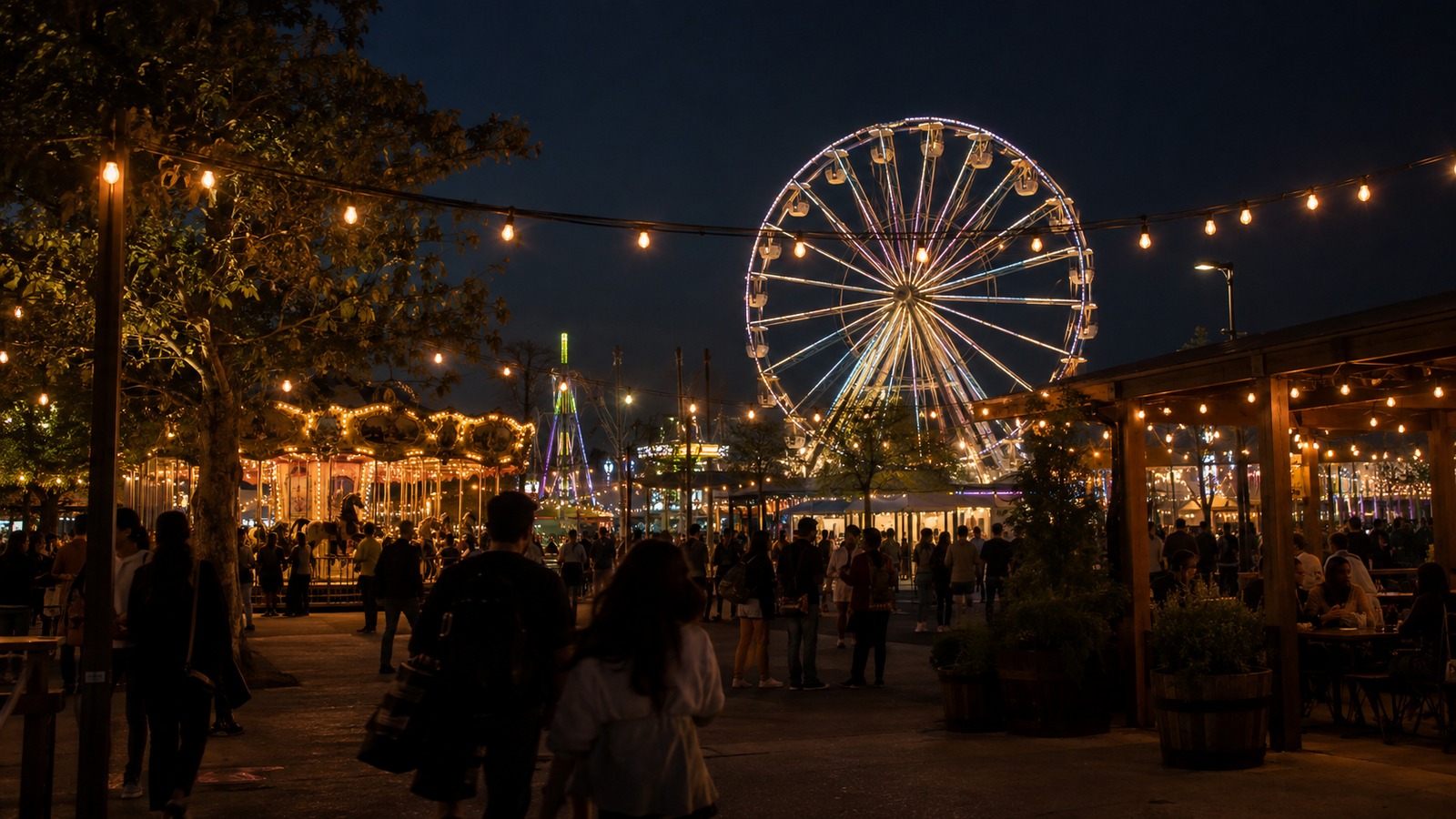
Riyadh Season is an extended, multi-month entertainment festival held annually in the Saudi capital, organized around a series of themed zones and events rather than a single venue or format. It typically runs from around October through the following spring, encompassing concerts, comedy shows, sporting events, an amusement park-style entertainment district, and cultural exhibitions spread across multiple sites throughout the city.
Rather than functioning as one continuous event, Riyadh Season operates more like an umbrella brand under which dozens of individual attractions and performances are scheduled throughout the season, allowing organizers to continuously refresh programming and draw repeat visits from residents and tourists alike.
The General Entertainment Authority's Role
Riyadh Season is organized by Saudi Arabia's General Entertainment Authority, a government body established in 2016 specifically to develop and regulate the kingdom's entertainment sector as part of the broader Vision 2030 diversification strategy. The authority's creation itself reflected a significant policy shift, since organized public entertainment had previously fallen largely outside formal government promotion in Saudi Arabia.
The General Entertainment Authority has used Riyadh Season as its flagship showcase event, coordinating logistics, security, international artist bookings, and infrastructure development across the sprawling festival footprint, while also using the event's success to justify continued investment in the broader entertainment sector.
Why 2019 Marked a Turning Point
While earlier, smaller entertainment initiatives preceded it, the 2019 edition of Riyadh Season is generally regarded as the moment the event reached a genuinely international scale, featuring performances from major global artists and drawing coverage from international entertainment and business media that had previously paid little attention to Saudi cultural programming. That edition is widely cited by industry observers as establishing the template — international headline acts combined with large-scale themed attractions — that subsequent seasons have built upon.
The rapid scale-up between the event's earliest incarnations and its 2019 breakthrough reflected significant government investment and a deliberate strategy of using high-profile bookings to generate international media attention disproportionate to the event's earlier, more modest scale.
Booking Global Superstars
A core part of Riyadh Season's strategy has involved securing performances from major international artists, drawing entertainers whose Middle East touring history had previously been limited or nonexistent. These bookings generate substantial media coverage both regionally and internationally, often becoming news events in their own right beyond the performances themselves.
Talent booking for events of this scale typically involves significant fees, and while exact figures are rarely disclosed publicly, entertainment industry reporting has periodically suggested that Riyadh Season and related Saudi entertainment initiatives have offered compensation packages substantial enough to attract artists who might otherwise have been hesitant to perform in the region, reflecting the strategic importance organizers place on high-profile bookings.
The Boulevard World and Themed Zones
Beyond individual concerts and performances, Riyadh Season features large permanent and semi-permanent themed districts, most notably Boulevard World, an area organized around pavilions representing different countries and cultures, alongside rides, restaurants, and immersive entertainment experiences. These zones are designed to draw repeat visits over the course of the season rather than a single one-time attendance.
The scale of infrastructure built for these themed areas — rides, stage productions, elaborate set design — represents a significant capital investment distinct from artist booking costs, reflecting an approach that treats Riyadh Season as much as a physical entertainment infrastructure project as a programming calendar.
Sports, Boxing, and Formula E Tie-Ins
Sports programming has become an increasingly prominent component of Riyadh Season, including major professional boxing matches that have drawn significant international sports media attention, alongside motorsport events and other athletic competitions scheduled to align with the broader season calendar. Saudi Arabia's parallel investment in sports more broadly, through entities connected to the Public Investment Fund, has often overlapped with and reinforced Riyadh Season's sports programming.
These sporting tie-ins serve a dual purpose commonly cited by Saudi officials: generating direct entertainment value for attendees and broadcast audiences, while also supporting the kingdom's broader sports diplomacy and soft power objectives that extend well beyond the Riyadh Season calendar itself.
The Economics of Ticket and Sponsorship Revenue
Riyadh Season generates revenue through ticket sales, sponsorship deals with domestic and international brands, and vendor and concession fees within its themed districts, though the event's overall financing structure relies heavily on government and General Entertainment Authority investment rather than being fully self-funded through commercial revenue alone. This financing model reflects Riyadh Season's role as a strategic Vision 2030 initiative rather than a purely commercial entertainment venture.
Independent economic analysts have generally noted that events of this scale rarely achieve full cost recovery through direct ticket and sponsorship revenue in their earlier years, with broader economic benefits — tourism spending, job creation, and international profile-raising — considered part of the strategic return rather than direct event profitability alone.
Tourism Strategy and Vision 2030 Targets
Riyadh Season fits within Saudi Arabia's broader Vision 2030 tourism strategy, which has set ambitious targets for annual visitor numbers and tourism's contribution to non-oil GDP. Saudi tourism officials have periodically cited Riyadh Season's attendance figures as evidence of progress toward these broader tourism diversification goals, alongside other tourism initiatives including AlUla and the Red Sea Project.
The event also plays a role in Saudi Arabia's broader effort to reposition its international image, particularly among audiences who may previously have associated the kingdom primarily with religious tourism through Mecca and Medina rather than with large-scale secular entertainment programming.
Cultural and Social Shifts Behind the Scenes
Riyadh Season's programming reflects significant social changes that have unfolded in Saudi Arabia since roughly 2016, including the lifting of the decades-long cinema ban, greater public gender mixing at entertainment events, and generally loosened restrictions on public entertainment compared to earlier decades. These changes did not occur because of Riyadh Season specifically, but the event has become one of the most visible public showcases of the broader social liberalization trend.
Saudi officials have generally framed these changes as part of a deliberate modernization strategy tied to Vision 2030's broader goals, while sociologists and regional analysts studying Saudi society have offered more varied assessments of how deeply and evenly these changes are being experienced across different segments of Saudi society.
Criticism and Cultural Debate
Riyadh Season has attracted criticism and debate from multiple directions: human rights organizations have periodically used the event's international spotlight to draw attention to broader human rights concerns in Saudi Arabia, arguing that high-profile entertainment programming should not distract from those issues, while some more socially conservative voices within Saudi Arabia have expressed discomfort with the pace and nature of the cultural changes the event represents.
International artists who have performed at Riyadh Season have themselves periodically faced public criticism and questions about the ethics of accepting bookings in Saudi Arabia, a debate that has recurred with nearly every major artist announcement and reflects the broader, unresolved tension between engagement-based and boycott-based approaches to Saudi Arabia's cultural opening.
Comparing Riyadh Season to Dubai's Entertainment Model
Riyadh Season is frequently compared by regional analysts to Dubai's longer-established position as a Gulf entertainment and tourism hub, though the two cities have pursued somewhat different strategies: Dubai's model has developed more gradually over several decades around retail, hospitality, and business tourism, while Riyadh Season represents a more concentrated, deliberately accelerated push to establish Riyadh's entertainment credentials within a compressed timeframe tied directly to Vision 2030's 2030 target horizon.
Tourism analysts have generally noted that Riyadh Season's rapid scale-up reflects Saudi Arabia's broader pattern across Vision 2030 giga-projects: pursuing ambitious, headline-grabbing initiatives on accelerated timelines rather than the more incremental development pace seen in some other regional tourism hubs.
Job Creation and Local Content Requirements
Saudi officials have cited Riyadh Season as a significant source of seasonal and permanent employment, spanning event management, hospitality, security, retail, and entertainment production roles, with local content requirements encouraging Saudi nationals' employment and Saudi vendor participation across the event's operations. The event has also been used as a training ground for building domestic expertise in large-scale event production, a sector that had limited prior infrastructure in Saudi Arabia.
Independent labor market analysts have generally noted that seasonal entertainment employment of this kind, while valuable, differs structurally from permanent job creation, meaning Riyadh Season's employment impact is best understood as one component of a broader tourism and entertainment sector development strategy rather than a standalone solution to youth employment challenges.
The Role of Qiddiya and Permanent Infrastructure
While Riyadh Season itself remains a seasonal event, it operates alongside Qiddiya, a permanent entertainment city under development near Riyadh that is intended to eventually host year-round attractions including theme parks, sports facilities, and cultural venues. Officials have generally described Riyadh Season and Qiddiya as complementary rather than competing initiatives, with Riyadh Season building near-term entertainment sector momentum and public demand while Qiddiya's permanent infrastructure develops over a longer timeline.
This phased approach — seasonal programming ahead of permanent infrastructure completion — has allowed Saudi Arabia to generate entertainment sector visibility and revenue well before Qiddiya's full buildout, a sequencing that tourism development analysts have generally described as a pragmatic way to build audience demand incrementally.
International Media Coverage and Soft Power
Riyadh Season has generated substantial international media coverage across entertainment, business, and sports journalism, coverage that Saudi officials have generally welcomed as evidence of the kingdom's growing international cultural profile. This media attention forms part of a broader Saudi soft power strategy that has also included investments in sports, film, and cultural diplomacy initiatives beyond Riyadh Season specifically.
Communications and public diplomacy researchers studying Gulf soft power strategies have generally noted that high-profile entertainment programming of this kind tends to generate significant media attention relatively quickly compared to other forms of national image-building, which helps explain why Riyadh Season has become a centerpiece of Saudi Arabia's broader international cultural outreach efforts.
Attendance Numbers and Their Limits
Saudi officials have periodically cited large cumulative attendance figures for Riyadh Season across its full multi-month run, figures that have grown substantially since the event's earlier editions. Independent analysts have generally cautioned that cumulative season-long attendance figures, which can include repeat visits by the same individuals across different events and zones, should be interpreted carefully rather than treated as equivalent to unique visitor counts.
Even accounting for this measurement nuance, most tourism analysts agree that Riyadh Season's attendance growth trajectory has been substantial and reflects genuine, sustained public demand rather than a one-time novelty effect, particularly given the event's continued year-over-year expansion in both programming scale and geographic footprint within the city.
Where Riyadh Season Goes From Here
As Vision 2030's 2030 target horizon approaches, Saudi officials have signaled continued investment in Riyadh Season alongside the parallel development of permanent entertainment infrastructure like Qiddiya, suggesting the event is likely to remain a recurring fixture rather than a short-term experiment. Future editions are likely to continue expanding both international artist bookings and the scale of themed entertainment districts, building on the template established since 2019.
Whatever form future seasons take, Riyadh Season has already served its most immediate strategic purpose: transforming international perception of Riyadh from a city largely absent from global entertainment conversations into one that headline international artists, sports promoters, and tourism media now actively track each year.
What Visitors Actually Experience on the Ground
For a first-time visitor, Riyadh Season can feel less like a single festival and more like navigating a small temporary city built specifically for entertainment, with different zones offering distinct atmospheres — Boulevard World's international pavilion district, dedicated concert venues, family-oriented amusement areas, and food and retail districts operating simultaneously across the city. Ticketing, transportation, and crowd management for an event of this scale have required substantial logistical coordination, particularly during peak weekend periods when attendance surges.
Local residents and returning visitors alike have generally noted that each successive season has introduced noticeably higher production values and more polished infrastructure compared to earlier editions, a progression that organizers have pointed to as evidence of Riyadh Season's operational maturation from an ambitious but still-developing concept into a more consistently executed annual institution.
Sources
- General Entertainment Authority — Saudi government body organizing Riyadh Season and regulating the kingdom's entertainment sector.
- Vision 2030 — Official Saudi government platform detailing tourism and entertainment diversification goals.
- Saudi Press Agency — Official state news agency reporting on Riyadh Season programming and attendance figures.
- Reuters — International news coverage of Riyadh Season bookings, criticism, and broader Saudi entertainment sector developments.
FAQ
What is Riyadh Season?
Riyadh Season is an extended, multi-month entertainment festival held annually in the Saudi capital, organized by the General Entertainment Authority and featuring concerts, sporting events, and themed entertainment districts like Boulevard World.
When did Riyadh Season become internationally recognized?
The 2019 edition is generally regarded as Riyadh Season's international breakthrough, featuring major global artists and drawing substantial international entertainment and business media coverage for the first time.
How does Riyadh Season relate to Vision 2030?
Riyadh Season supports Vision 2030's tourism and entertainment diversification targets, aiming to boost non-oil GDP contribution, create jobs, and reposition Saudi Arabia's international image beyond religious tourism.
Has Riyadh Season faced criticism?
Yes, human rights organizations have used the event's spotlight to highlight broader concerns in Saudi Arabia, while some performing artists have faced public questions about the ethics of accepting bookings there.
How does Riyadh Season relate to Qiddiya?
Riyadh Season is a seasonal event that officials describe as complementary to Qiddiya, a permanent entertainment city under development near Riyadh intended to host year-round attractions once completed.
About the Author
We reference the General Entertainment Authority, the official Vision 2030 platform, the Saudi Press Agency, and Reuters to explain the background and current understanding of this topic.
Loved This Article?
Share it on WhatsApp → Share it on WhatsApp
Get more guides in your inbox — Subscribe to our newsletter for weekly surprising stories from Egypt, Saudi Arabia, Dubai, and beyond.