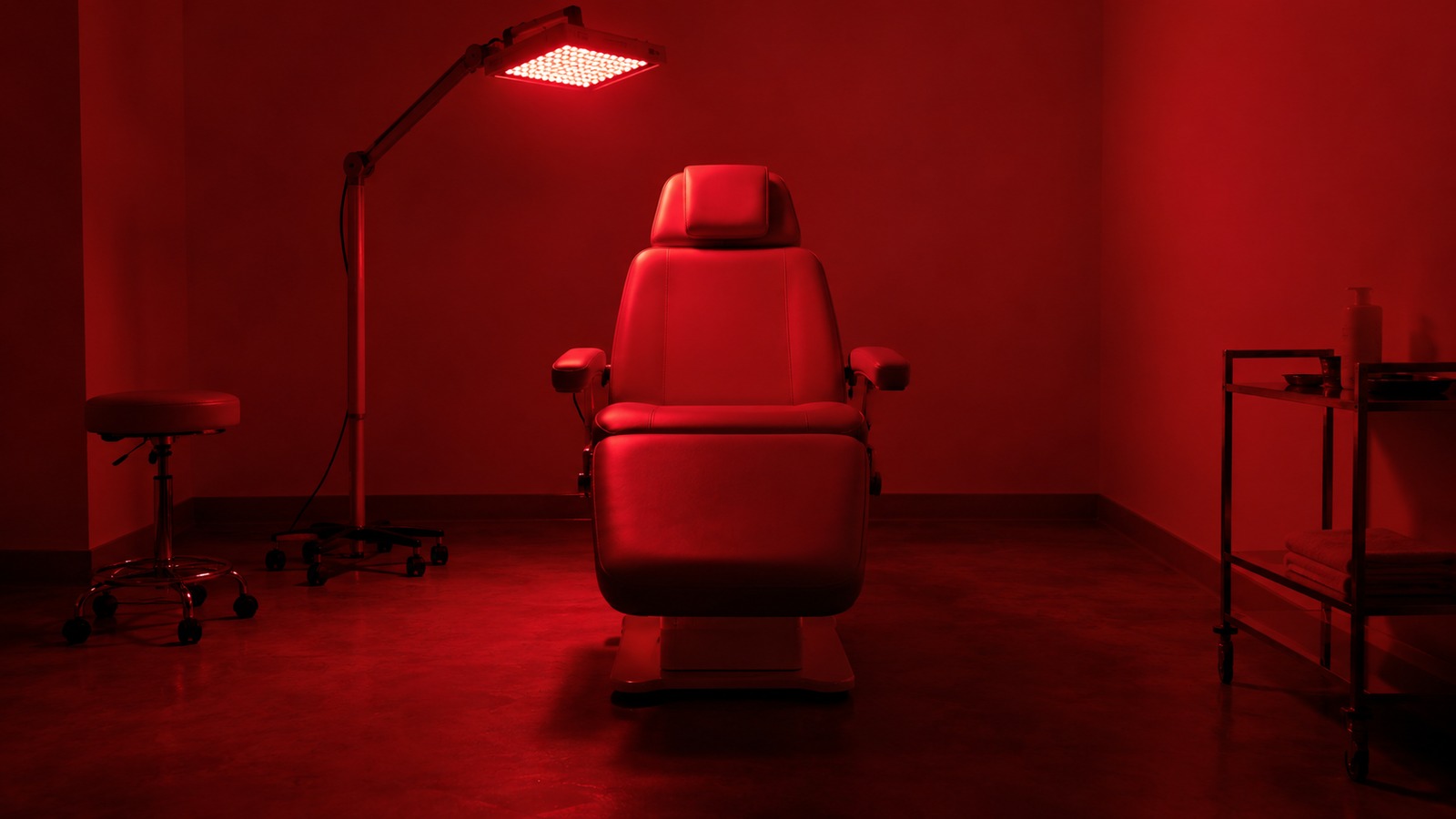
Red light therapy panels now sit in gyms, dermatology clinics, and living rooms, promising everything from smoother skin to faster muscle recovery to better sleep, often based on a single scientific-sounding word repeated across product pages: photobiomodulation. The underlying cellular mechanism behind that word is real and has genuinely been studied for decades, in some form since the late 1960s, but the distance between what's actually been demonstrated in controlled laboratory and clinical settings and what's promised on a typical consumer product page is often considerably larger than the marketing suggests.
What Red Light Therapy Actually Is
Red light therapy, also called photobiomodulation therapy or, in its earlier clinical form, low-level laser therapy, involves exposing skin or tissue to specific wavelengths of red and near-infrared light, typically in the range of roughly 630 to 850 nanometers, delivered by LED panels, handheld devices, or medical-grade lasers.
Unlike ultraviolet light, which carries enough energy to damage DNA and is the primary driver of skin cancer risk from sun exposure, red and near-infrared light sit at longer, lower-energy wavelengths that penetrate tissue without that same DNA-damaging mechanism, a distinction that matters considerably for understanding the actual risk-benefit profile of the treatment.
The technology has been used in various clinical and research settings since the late 1960s, originally investigated for wound healing and tissue repair, and has expanded considerably in the past decade into a large consumer wellness and beauty market, which is where the gap between clinical research and marketing claims has widened most noticeably.
The Core Mechanism Claim: Photobiomodulation
Photobiomodulation is the term researchers use to describe how red and near-infrared light is thought to influence cellular function without generating significant heat, distinguishing it from other light-based medical treatments, including certain laser procedures, that work primarily through controlled thermal tissue damage.
The central mechanistic claim, first proposed in research dating back decades and refined since, is that specific wavelengths of light are absorbed by a mitochondrial enzyme, potentially triggering a cascade of downstream cellular effects related to energy production, oxidative stress signaling, and inflammation, rather than working through heat or any other more familiar therapeutic mechanism.
This mechanism has been documented in laboratory settings using cell cultures and animal models with a reasonable degree of scientific consistency, which is precisely why photobiomodulation, unlike many wellness trends built on essentially no cellular mechanism at all, has a genuine, published, peer-reviewed research foundation behind the basic concept.
How Mitochondria Are Supposed to Respond to Red Light
The specific molecular target researchers have focused on is cytochrome c oxidase, an enzyme embedded in the mitochondrial membrane that plays a key role in the cellular energy production process, and laboratory studies have found this enzyme can absorb light at certain red and near-infrared wavelengths.
The proposed downstream effect is that this light absorption may temporarily increase the enzyme's activity, potentially boosting the mitochondria's production of adenosine triphosphate, the molecule cells use as their primary energy currency, which researchers have hypothesized could support faster tissue repair and reduced inflammatory signaling in affected cells.
It's worth being precise about the word "hypothesized" here, since while the light-absorption step itself is well documented in laboratory conditions, the full chain connecting that initial cellular event to specific, measurable clinical outcomes in living human tissue is considerably more complex and, for many claimed applications, less thoroughly established than the initial mechanism alone.
Where the Cellular Mechanism Has Real Laboratory Support
Cell culture and animal studies examining photobiomodulation's effect on mitochondrial function, cellular energy production, and certain inflammatory markers have produced a reasonably consistent body of published, peer-reviewed research, giving the basic biological premise more scientific grounding than many popular wellness technologies possess.
This laboratory-level evidence is genuinely meaningful and distinguishes red light therapy from purely pseudoscientific wellness products, since researchers can point to specific, reproducible cellular and molecular effects observed under controlled laboratory conditions rather than relying purely on anecdotal or theoretical claims.
The important caveat, one that gets lost frequently in consumer marketing, is that a well-documented cellular mechanism in a lab dish or animal model does not automatically guarantee an equivalent, clinically meaningful effect in a living human body under real-world treatment conditions, a gap that shows up repeatedly across many areas of medical and wellness research, not just this one.
Wavelength, Dose, and Why Both Matter
Photobiomodulation research has consistently found that treatment outcomes depend heavily on specific wavelength, irradiance, or light intensity, and total light dose delivered to tissue, following what researchers describe as a biphasic dose-response pattern, where insufficient light produces little effect and excessive light can actually reduce or reverse the beneficial cellular response.
This dose-dependent, biphasic relationship is a genuinely important technical detail because it means simply sitting in front of any red-light-emitting device for any duration doesn't reliably replicate results from a specific clinical study, since that study likely used a carefully controlled combination of wavelength, intensity, distance, and exposure time that a different device or protocol may not match.
Consumer red light therapy products frequently market a single headline wavelength or a general "clinically proven" claim without disclosing the specific irradiance and dosing parameters that produced the cited research results, which makes it genuinely difficult for an average buyer to know whether a given product can realistically replicate the effects described in any particular published study.
What Clinical Trials Show for Skin and Wound Healing
Certain wound healing applications represent one of red light therapy's more substantially supported clinical use cases, with multiple controlled trials finding evidence of accelerated healing in specific wound types, including some diabetic ulcers and certain post-surgical wounds, when treatment parameters closely matched the protocols used in the supporting research.
For general skin rejuvenation claims, including reduced fine lines and improved skin texture, a smaller but genuine body of clinical research, including some randomized controlled trials, has found modest measurable improvements in certain skin quality markers, though study sizes in this specific area tend to be smaller than in some other medical fields, and results vary meaningfully across different studies and skin types.
Dermatology researchers who have reviewed this evidence generally describe the skin-related findings as promising and worth continued study rather than definitively conclusive, a more measured characterization than the confident, dramatic-transformation language commonly used in consumer red light therapy marketing.
What the Evidence Shows for Pain and Inflammation
Certain musculoskeletal pain conditions, including some cases of osteoarthritis and specific types of tendon and joint pain, have accumulated a reasonably substantial body of clinical trial evidence, including some systematic reviews finding modest but statistically meaningful pain reduction compared with placebo treatment in several studied populations.
This pain-related evidence base is generally considered stronger and more consistent than the evidence for many popular cosmetic and general wellness claims, in part because pain and inflammation reduction align more directly with photobiomodulation's proposed anti-inflammatory cellular mechanism than some of the more loosely connected claims made in broader wellness marketing.
Even within this comparatively stronger evidence category, researchers conducting these reviews consistently note significant variation in treatment protocols across different studies, complicating direct comparisons and making it difficult to establish a single universally agreed-upon optimal treatment protocol for any specific pain condition.
The Weaker Evidence: Hair, Weight Loss, and Anti-Aging
Claims about red light therapy stimulating hair regrowth, most commonly marketed for androgenetic alopecia, have some genuine supporting clinical research, including trials showing modest improvements in hair density, but the overall evidence base remains considerably smaller and less consistent than for wound healing or pain applications.
Weight loss and body-contouring claims associated with certain red light devices rest on comparatively weaker and more preliminary evidence, with some small studies suggesting modest, temporary effects on localized fat measurements that have not been consistently replicated at a scale or consistency that would support the more dramatic claims common in marketing for these specific products.
Broad general anti-aging claims, often the most aggressively marketed use case for consumer red light panels, rest on the smallest and most preliminary evidence base among the applications discussed in this article, generally extrapolating from more narrowly studied skin-texture findings into considerably broader promises about aging reversal that the underlying research doesn't directly support.
Why Small Studies and Industry Funding Complicate the Picture
A recurring pattern across photobiomodulation research, noted by independent researchers conducting systematic reviews, is that many supporting studies involve relatively small participant numbers, a limitation that increases the risk of results not replicating consistently in larger, more rigorously designed follow-up studies.
Industry funding of red light therapy research is common, as it is across much of the medical device and wellness technology field more broadly, and independent reviewers have specifically flagged this as a factor worth considering when interpreting particularly favorable study results, not because industry-funded research is automatically invalid, but because funding source is a documented factor correlated with more favorable reported outcomes across many areas of medical research.
This pattern doesn't mean red light therapy research should be dismissed, but it does mean that systematic reviews aggregating results across many independent studies, weighting for study quality and size, generally provide a more reliable picture of actual effectiveness than any single favorable study, however impressive that individual study's reported results might sound in isolation.
How Red Light Therapy Devices Are Regulated
In several major markets, including the United States, many consumer red light therapy devices are regulated as general wellness products rather than as medical devices requiring the same rigorous pre-market clinical evidence standards applied to prescription treatments or FDA-cleared medical lasers used in clinical settings.
Some specific red light devices have received regulatory clearance for narrowly defined uses, generally based on submitted clinical evidence for that specific, limited application, but this device-specific regulatory clearance does not automatically extend to every broader wellness claim a company might make about the same underlying device in its general marketing materials.
This regulatory gap between narrow device clearance and broad marketing language is a genuinely important detail for consumers to understand, since a product's official regulatory clearance for one specific, limited use is often quietly, and sometimes misleadingly, extended in advertising to imply support for a much wider range of unproven claims.
Comparing Clinical-Grade Devices With Consumer Panels
Devices used in the clinical trials that produced the most substantial supporting evidence, particularly for wound healing and certain pain applications, are generally medical-grade equipment with precisely controlled and independently verified wavelength output and irradiance, calibrated and maintained under professional clinical conditions.
Consumer red light panels marketed for home use vary considerably in build quality, and independent testing of some commercial devices has found discrepancies between advertised and actual measured wavelength output and irradiance, meaning a given consumer product may not reliably deliver the same treatment parameters as the clinical devices used in supporting published research.
This device-quality variability is a genuinely practical reason clinical trial results, even strong ones for a specific narrow application, don't automatically transfer to every consumer product marketed with similar language, since the actual light delivered to skin can differ meaningfully between a calibrated clinical device and an unverified consumer panel despite similar marketing claims.
Is Red Light Therapy Safe?
Red and near-infrared light therapy is generally considered a comparatively low-risk treatment relative to ultraviolet-based approaches like tanning beds, since it doesn't use the shorter, higher-energy ultraviolet wavelengths specifically linked to increased skin cancer risk and premature skin aging from sun exposure.
Reported side effects in clinical studies are generally mild and infrequent, most commonly including temporary skin redness or, in some cases, mild irritation, with eye protection generally recommended during treatment given the intensity of light some devices emit, particularly higher-powered clinical or professional units.
This favorable general safety profile is one of the more genuinely well-supported claims in red light therapy marketing, distinct from the considerably more mixed evidence picture for many specific effectiveness claims discussed throughout this article, meaning the treatment's relative safety and its proven effectiveness for any particular use case are two separate questions worth evaluating independently.
Common Misconceptions About Red Light Therapy
A common misconception treats red light therapy as either entirely proven medical treatment or entirely unfounded pseudoscience, when the reality published research supports is considerably more nuanced: a real, laboratory-documented cellular mechanism with meaningfully varying levels of clinical evidence depending on the specific claimed application.
Another misconception assumes any red-light-emitting consumer device will reliably replicate results from published clinical studies, when device-specific factors including wavelength accuracy, irradiance, and treatment protocol adherence significantly affect whether a given consumer product can realistically achieve outcomes similar to those reported in the supporting clinical trial literature.
A third misconception treats all red light therapy claims as equally well-supported, when the evidence quality varies substantially by specific application, with certain wound healing and pain-related uses considerably better supported by published clinical research than broader cosmetic and general anti-aging claims commonly emphasized in consumer marketing.
What a Reasonable, Evidence-Based Take Looks Like
The most defensible position, based on the published research reviewed throughout this article, treats photobiomodulation as a genuine biological phenomenon with real, if still incompletely mapped, mechanisms and clinical applications, rather than dismissing the underlying science entirely or accepting every specific marketed claim uncritically.
For anyone considering red light therapy, the evidence most strongly supports its use for certain wound healing and specific musculoskeletal pain applications, with more moderate confidence warranted for skin-texture-related claims, and considerably more skepticism warranted for hair regrowth, weight loss, and broad anti-aging promises that rest on comparatively thin, preliminary, or industry-funded research.
Device quality and specific treatment parameters genuinely matter for whether a consumer product can realistically replicate clinical trial outcomes, so a reasonable approach favors devices with independently verified, clinically relevant wavelength and irradiance specifications over products relying primarily on the general word "photobiomodulation" without disclosing those underlying technical details.
Red light therapy occupies a genuinely interesting middle ground rarely acknowledged in either enthusiastic marketing or dismissive skepticism: a real cellular mechanism, documented in decades of laboratory research, that supports some specific clinical applications considerably more strongly than others. The gap between what photobiomodulation research actually demonstrates and what a typical consumer product page promises is where most of the confusion, and most of the marketing overreach, actually lives. Understanding which specific claims rest on solid clinical evidence and which remain preliminary is the difference between using red light therapy thoughtfully and buying into a good story about mitochondria.
Sources
- National Center for Biotechnology Information, PubMed Central — Peer-reviewed research on photobiomodulation mechanisms and clinical trial outcomes.
- U.S. Food and Drug Administration — Regulatory classification of light-based therapeutic devices.
- American Academy of Dermatology — Clinical guidance on light-based skin treatments.
- Cochrane Library — Systematic reviews of low-level laser and light therapy for pain and wound healing.
FAQ
Is red light therapy scientifically proven?
The underlying cellular mechanism, called photobiomodulation, has real laboratory support, and specific clinical uses like certain wound healing and some pain conditions have reasonable trial evidence, but many popular consumer claims, including hair regrowth and broad anti-aging effects, have considerably weaker evidence.
What is photobiomodulation?
Photobiomodulation is the proposed mechanism by which red and near-infrared light is absorbed by a mitochondrial enzyme called cytochrome c oxidase, potentially increasing cellular energy production and triggering downstream effects on inflammation and tissue repair.
Do at-home red light therapy panels work as well as clinical devices?
Not necessarily. Clinical trials generally use devices with specific, controlled wavelengths, irradiance, and treatment durations, and consumer panels often differ from those parameters in ways that are not always disclosed, making it difficult to directly apply clinical trial results to a specific consumer product.
Is red light therapy safe?
Red light and near-infrared light therapy is generally considered low-risk compared with UV-based treatments, since it does not use ultraviolet wavelengths associated with skin cancer risk, though eye protection is generally recommended and some people report mild skin irritation.
Which red light therapy claims have the strongest evidence?
Certain wound healing applications and some musculoskeletal pain conditions have the most substantial clinical trial support, while claims about hair regrowth, weight loss, and broad anti-aging effects generally rest on smaller or more preliminary studies.
About the Author
We reference peer-reviewed studies indexed on PubMed Central, the U.S. Food and Drug Administration, the American Academy of Dermatology, and the Cochrane Library to explain the background and current understanding of this topic.
Loved This Article?
Share it on WhatsApp → Share it on WhatsApp
Get more guides in your inbox — Subscribe to our newsletter for weekly surprising stories from Egypt, Saudi Arabia, Dubai, and beyond.