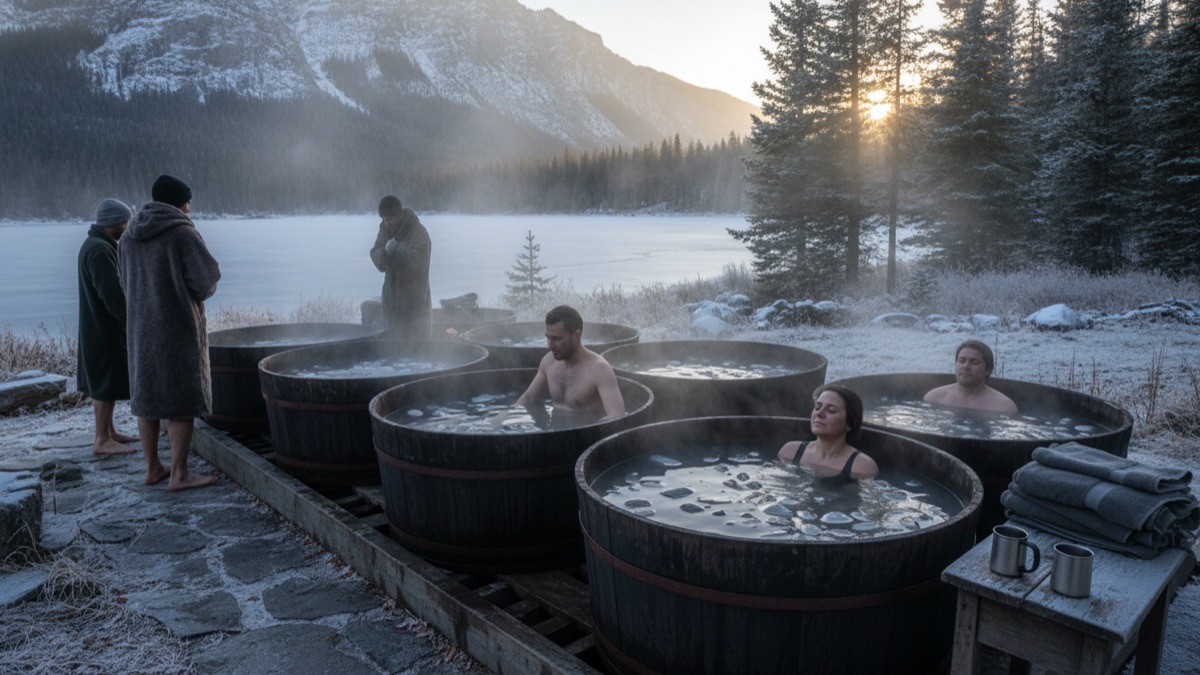
A decade ago, submerging yourself in near-freezing water for fun was mostly the domain of elite athletes and a small circle of endurance enthusiasts. Today, dedicated cold plunge tubs sell out at home goods retailers, gyms advertise plunge pools as a core amenity, and morning cold-immersion videos routinely rack up millions of views. The practice has moved from niche recovery tool to lifestyle signal remarkably fast, and the research trying to keep pace with it tells a more measured story than the marketing usually does.
From Fringe Recovery Tool to Morning Ritual
Cold water immersion has a long history in recovery science, with ice baths used by athletic trainers for decades to manage swelling and soreness after intense competition, long before anyone described it as a wellness practice.
What changed more recently is the framing: rather than a targeted post-injury or post-competition tool used occasionally, cold plunging is now marketed as a standalone daily habit, positioned alongside meditation and cold showers as part of a broader self-optimization routine.
This shift from occasional clinical tool to daily ritual is itself worth noting, since much of the research on cold water immersion was designed around athletic recovery contexts rather than the habitual, non-athletic use that has become common today.
Retailers have responded quickly to the demand, with dedicated plunge tub brands raising significant venture funding and boutique cold-therapy studios opening in major cities, a commercial expansion that market researchers say happened faster than the underlying science could be fully evaluated.
What Cold Water Actually Does to the Body
Sudden cold exposure triggers what researchers call the cold shock response, an involuntary reaction involving a sharp gasp, rapid breathing, and an immediate spike in heart rate as the body reacts to the sudden drop in skin temperature.
This response is driven substantially by a surge in norepinephrine, a stress hormone and neurotransmitter tied to alertness and focus, which is a major part of why cold exposure produces such a widely reported jolt of wakefulness.
Blood vessels near the skin constrict in response to the cold, redirecting blood flow toward the body's core to preserve heat for vital organs, a reflex that explains the numbness in extremities that plungers commonly describe.
Breathing patterns also shift noticeably during the first thirty to sixty seconds of exposure, and much of the coaching that surrounds cold plunge culture is specifically aimed at helping newcomers manage this involuntary hyperventilation rather than fight it.
The Dopamine Claim, Examined Closely
A frequently cited claim, popularized partly through the work of neuroscientist Andrew Huberman, is that cold exposure produces a sustained rise in circulating dopamine, a neurotransmitter linked to motivation and mood, that outlasts the plunge itself by hours.
The underlying research this claim draws on, including older Finnish studies on cold water immersion, does show measurable and unusually prolonged dopamine increases following cold exposure compared to many other interventions studied.
However, the specific claim of a fixed percentage increase that circulates widely in wellness content extends beyond what the small number of underlying studies, several involving very few participants, can actually support with precision, even though the general directional finding appears genuine.
Cold Plunging and Mood: What the Data Shows
Beyond the acute alertness effect, some smaller studies and surveys have reported improved self-rated mood and reduced perceived stress among people who plunge regularly, though most of this evidence relies on self-report rather than objective measures.
Researchers studying cold water swimming, a related but not identical practice, have found associations with reduced anxiety symptoms in observational studies, though these designs cannot fully rule out that people who already feel better are more likely to keep up the habit.
Taken together, the mood-related evidence is suggestive and worth taking seriously, but it falls well short of the confident, causal claims common in cold plunge marketing content.
Some clinicians have also cautioned that cold exposure is not an appropriate substitute for evidence-based treatment of clinical depression or anxiety disorders, even as they acknowledge it may offer a genuine, modest mood benefit for otherwise healthy people.
Athletic Recovery: A Genuinely Mixed Picture
Ice baths have long been used to reduce muscle soreness after intense exercise, and multiple studies do show measurable reductions in perceived soreness when cold immersion follows strenuous activity.
However, a body of more recent research has complicated this picture considerably, with several studies finding that cold exposure immediately after resistance training may actually blunt some of the muscle adaptation and strength gains that the inflammatory response normally helps drive.
This has led some sports scientists to recommend timing cold exposure away from strength training sessions specifically, even while acknowledging it may still hold recovery value after endurance events or in reducing perceived soreness, illustrating how the same intervention can carry different tradeoffs depending on the goal.
Brown Fat and Metabolism Claims
One of the most repeated claims is that cold exposure activates brown fat, a metabolically active tissue type that burns calories to generate heat, with the implication that regular cold exposure meaningfully boosts metabolism or aids weight loss.
Brown fat activation in response to cold is genuinely documented in research, particularly around cold-adapted populations and controlled cold-exposure studies, but the actual caloric effect of typical cold plunge exposure, a few minutes, a few times weekly, is generally much smaller than popular claims suggest.
This is a case where a real physiological mechanism exists but its practical magnitude for an average person's metabolism or weight management has been considerably overstated in mainstream wellness content, a gap researchers in the field have specifically pushed back on.
Dietitians note that the calories burned during a typical plunge session are comparable to a short walk, meaning cold exposure is unlikely to meaningfully change body composition on its own without accompanying changes to diet and overall activity level.
Why Social Media Accelerated the Trend
Cold plunging is unusually well suited to short-form video content: the reaction is immediate, visually dramatic, and easy to film, making it a natural fit for platforms that reward visceral, attention-grabbing moments.
Influencers and public figures documenting daily plunge routines helped normalize the practice far beyond athletic circles, often pairing the visual content with confident claims about metabolism, immunity, and mental toughness that outpace the underlying research.
This dynamic, a genuine physiological effect amplified by content incentives that reward certainty over nuance, is a pattern common to many wellness trends, not unique to cold plunging specifically.
The Wim Hof Method and Its Influence
Dutch extreme athlete Wim Hof popularized a specific combination of breathing exercises, cold exposure, and mental focus techniques that has become closely associated with modern cold plunge culture, even though cold exposure alone predates his method by decades.
Hof's own record-setting cold tolerance feats, including prolonged ice immersion and high-altitude climbs in minimal clothing, helped generate significant media attention, even though researchers caution that his personal extreme tolerance is not representative of what an average practitioner should expect or attempt.
Some controlled studies on the Wim Hof Method have found participants show altered immune responses under experimental conditions, including one widely cited study on endotoxin exposure, though independent replication and larger sample sizes remain limited.
Researchers generally caution that these preliminary findings, while intriguing, involve small, tightly controlled experimental setups that do not necessarily translate to the health claims commonly attributed to the method in popular content.
Immune System Claims and Their Limits
Marketing around cold plunging frequently claims it "boosts immunity" in a broad, general sense, a framing that meaningfully overstates what the underlying research on cold exposure and immune markers actually demonstrates.
The strongest immune-related findings come from small, specific experimental protocols rather than casual daily plunging, and researchers have not established that regular cold exposure meaningfully reduces illness frequency or severity in typical practitioners.
As with several other cold exposure claims, there is a real, narrow finding buried inside a much broader and less supported marketing message, and separating the two requires reading past the headline claim.
Cardiovascular Risk: What Doctors Actually Warn About
Sudden cold water immersion causes a rapid spike in blood pressure and heart rate, which cardiologists note can pose genuine risk for people with existing heart conditions, uncontrolled high blood pressure, or a history of arrhythmia.
The American Heart Association and multiple cardiology researchers have specifically flagged the cold shock response as a documented, if uncommon, trigger for cardiac events in vulnerable individuals, distinct from the general wellness benefits discussed elsewhere.
This is one area where the medical caution is not a matter of nuance or overstated marketing but a genuinely important safety consideration that responsible cold plunge content should not minimize, particularly for older adults or anyone with cardiovascular risk factors.
Discomfort as Part of the Appeal
Psychologists studying voluntary discomfort practices note that part of cold plunging's appeal may lie less in any specific physiological outcome and more in the psychological experience of deliberately choosing and completing something uncomfortable.
This framework, sometimes discussed under the umbrella of hormesis or controlled stress exposure, suggests that the sense of accomplishment and self-discipline from a completed plunge may itself carry genuine psychological value, independent of the physiological claims layered on top.
This doesn't diminish the practice, but it does suggest that some of the reported benefits may be as much about ritual, mindset, and self-efficacy as about any single biochemical pathway.
How Long and How Cold Actually Matters
Most of the research showing measurable physiological effects involves water temperatures roughly between 10 and 15 degrees Celsius and exposure times ranging from under a minute to a few minutes, figures that differ meaningfully from some influencer recommendations.
Very cold water for extended periods increases both the intensity of the physiological response and the associated cardiovascular risk, meaning that "colder and longer" is not necessarily safer or more beneficial in a simple linear way.
Researchers studying cold exposure generally emphasize that consistency of practice over time matters more than pushing toward extreme temperatures or durations, a nuance that tends to get lost in content optimized for dramatic visuals.
Comparing Cold Plunges to Cold Showers
Cold showers produce a milder version of the same cold shock response, since water temperature and full-body immersion depth are both typically less extreme than a dedicated plunge tub or natural cold water source.
Some researchers argue cold showers offer a genuinely accessible, lower-risk entry point that still triggers meaningful alertness and mood effects, making them a reasonable starting point for people curious about cold exposure without investing in equipment.
The tradeoff is that some of the more pronounced physiological responses studied in plunge research, particularly around brown fat activation, appear to scale with the intensity and duration of cold exposure in ways a brief shower may not fully replicate.
The Community and Ritual Element
Group cold plunge events, from organized meetups to informal friend groups, have become a notable part of the culture, with many practitioners describing the social and ritual aspects as central to why they keep the habit going.
Sociologists studying wellness trends note that shared discomfort experiences often build strong group cohesion and accountability, functions that may sustain the practice independent of whatever the underlying physiological research eventually settles on.
This community dimension helps explain part of the trend's staying power, since habits reinforced by social accountability and shared identity tend to persist longer than those relying purely on individual willpower.
Wellness researchers studying habit formation more broadly note that this social scaffolding may explain why cold plunging has better adherence rates among casual practitioners than some equally well-supported but more solitary interventions, such as meditation.
Where the Marketing Outruns the Evidence
The most consistently supported findings involve short-term alertness, a norepinephrine-driven mood lift, and some evidence of reduced perceived stress with regular practice, effects that are real but relatively modest in scope.
The weakest evidence, frequently presented with the greatest confidence in popular content, involves specific metabolic transformation claims, broad immune system boosting, and any suggestion that cold plunging substitutes for medical treatment of anxiety or depression.
A fair reading of the current research supports cold plunging as a genuinely stimulating, potentially mood-supportive practice for healthy adults, while cautioning against the more dramatic claims that have attached themselves to it as it moved from athletic training rooms to social media feeds.
What a Reasonable Starting Protocol Looks Like
Sports medicine physicians generally recommend that beginners start with shorter exposure times and less extreme temperatures, gradually building tolerance rather than attempting an extended, very cold plunge on a first attempt.
Screening for cardiovascular risk factors before beginning is a recurring recommendation across medical guidance, particularly for anyone with existing heart conditions, high blood pressure, or a family history of cardiac events.
Never plunging alone, especially in open water rather than a controlled tub, is another consistent piece of safety guidance, since the cold shock response can occasionally impair swimming ability or judgment in ways that are dangerous without someone present to help.
Beyond the safety framing, the most sustainable approach appears to be treating cold plunging as one component of a broader routine rather than a singular miracle intervention, consistent with how most of the credible supporting research is actually structured.
Sources
- American Heart Association — Guidance on cardiovascular risk and cold water immersion.
- U.S. National Institutes of Health (NIH) — Research reviews on cold exposure physiology and norepinephrine response.
- Johns Hopkins Medicine — Clinical perspective on cold plunge benefits and risks.
- Reuters — Reporting on the growth of cold plunge culture and consumer trends.
FAQ
Is cold plunging scientifically proven to boost the immune system?
Not in the broad sense often marketed; the strongest immune-related findings come from small, tightly controlled experimental studies rather than casual daily plunging, and researchers haven't established that regular cold exposure meaningfully reduces illness in typical practitioners.
Does cold plunging actually raise dopamine levels?
Some studies, including older Finnish research, do show measurable and unusually prolonged dopamine increases after cold exposure, though the precise percentage figures that circulate widely in wellness content extend beyond what the small underlying studies can support with confidence.
Is cold plunging safe for everyone?
No; cardiologists specifically warn that the sudden spike in blood pressure and heart rate from cold shock can pose real risk for people with existing heart conditions, uncontrolled high blood pressure, or arrhythmia, making medical screening advisable before starting.
How cold and how long should a cold plunge be?
Most research showing measurable effects uses water around 10 to 15 degrees Celsius for under a minute to a few minutes, and researchers generally emphasize consistency over pushing toward extreme temperatures or durations.
Is a cold shower a good substitute for a cold plunge?
Cold showers trigger a milder version of the same cold shock response and offer a genuinely accessible, lower-risk entry point, though some of the more pronounced effects studied in plunge research may scale with greater cold intensity and duration.
About the Author
We reference the American Heart Association, the U.S. National Institutes of Health, Johns Hopkins Medicine, and Reuters reporting to explain the background and current understanding of this topic.
Loved This Article?
Share it on WhatsApp → Share it on WhatsApp
Get more guides in your inbox — Subscribe to our newsletter for weekly surprising stories from Egypt, Saudi Arabia, Dubai, and beyond.