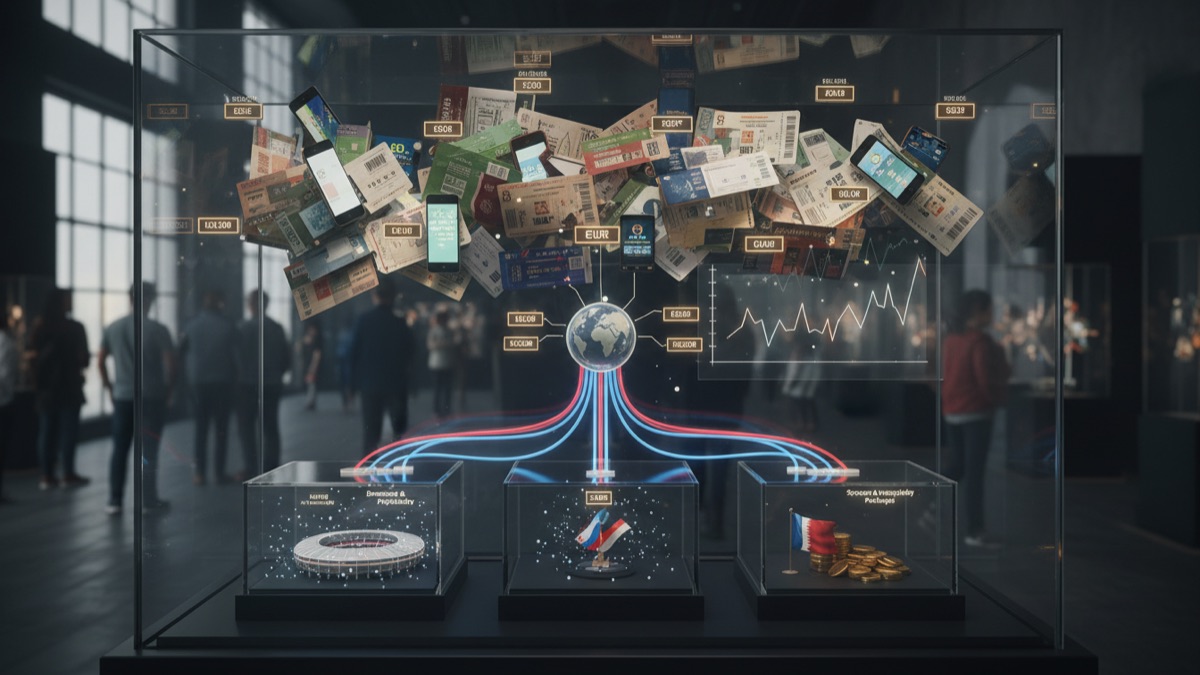
Two fans buying tickets to the same World Cup match, on the same day, through the same official FIFA platform, can end up paying noticeably different prices. That's not a bug or a scam — it's how FIFA's ticket pricing system for the 2026 tournament is actually designed to work, and understanding the logic behind it explains both why prices move and why so many fans feel confused or frustrated by the process.
Why World Cup Tickets Don't Have Fixed Prices
Unlike a traditional fixed-price ticketing model, where every seat in a given category costs the same amount regardless of when it's purchased, FIFA has adopted a dynamic pricing approach for the 2026 World Cup that allows prices to shift based on demand.
This means the listed price for a given match and seating category isn't necessarily the final price a fan pays — it can move upward as demand increases, similar to pricing models already common in airline tickets and ride-hailing apps.
This shift represents a meaningful departure from how FIFA priced tickets in previous tournaments, and it's a major reason the 2026 ticketing process has generated more public discussion than prior World Cup ticket sales.
FIFA's Category System Explained
FIFA organizes World Cup seating into multiple price categories per stadium, generally ranging from premium seating closest to the pitch down to more affordable upper-tier seating, a structure similar to most major sporting events.
Category assignments are based primarily on physical seat location and sightlines, meaning two tickets in the same category at different stadiums should offer a broadly comparable viewing experience, even though the stadiums themselves differ.
Within each category, the dynamic pricing layer then determines the actual price a fan pays at the moment of purchase, meaning category alone doesn't fully determine cost — timing and demand do as well.
Dynamic Pricing Comes to the World Cup
Dynamic pricing for major events isn't new — Formula 1, several English Premier League clubs, and numerous large concert tours have used demand-based pricing models for years — but the 2026 World Cup marks its first large-scale application to FIFA's flagship tournament.
Under this model, ticket prices are typically set with an initial baseline and then algorithmically adjusted upward as demand for a specific match and category increases, meaning early buyers generally, though not always, get better prices than those purchasing closer to a high-demand match.
This represents a genuine shift in how FIFA monetizes World Cup tickets, moving from a system designed primarily around access and fixed affordability toward one that more directly captures the market value of high-demand matches.
Why FIFA Adopted Demand-Based Pricing
FIFA and tournament organizers have framed dynamic pricing partly as a way to capture more of the revenue that would otherwise flow to secondary market resellers, since a fixed-price ticket for a high-demand match creates an obvious arbitrage opportunity for scalpers.
Sports economists studying ticket markets generally note that dynamic pricing does reduce the gap between face value and resale value compared to fixed pricing, since the official price moves closer to what the market will actually bear.
Whether this benefits fans overall is genuinely contested: it can reduce scalping profits, but it also means fans pay closer to true market rates for popular matches rather than benefiting from artificially low fixed prices that occasionally allowed lucky ticket-holders to get a bargain.
How the Sales Phases Work
FIFA has typically structured World Cup ticket sales across multiple phases, starting with an early registration or lottery-style draw phase, followed by subsequent on-sale windows as the tournament approaches and more information about specific matchups becomes available.
Earlier sales phases generally happen before final group stage matchups are known, meaning early buyers commit to a specific match and stadium without full certainty about which teams will actually be playing, a genuine risk for fans buying tickets tied to a specific national team.
Later phases, closer to the tournament, typically offer more certainty about matchups but come with the tradeoff of potentially higher dynamic-pricing-driven costs, since demand and urgency both increase as the tournament date approaches.
The Resale Platform and Its Rules
FIFA operates an official resale platform intended to give fans who can no longer attend a legitimate, controlled way to resell tickets, generally at or near face value rather than an unrestricted secondary market price.
This official resale channel exists specifically to compete with and undercut unofficial secondary markets, where resale prices for popular matches can significantly exceed original face value with no protections for buyers against fraud.
Tickets purchased or resold outside FIFA's official channels generally carry real risk, including the possibility of invalid or duplicated tickets, since FIFA's ticketing system can invalidate tickets not processed through its own official resale mechanism.
Why Host Country and Matchup Matter
Because the 2026 World Cup is hosted across the United States, Canada, and Mexico, ticket demand and pricing patterns vary by host city and stadium, reflecting differences in local market size, travel accessibility, and regional fan base concentration.
Matches involving historically popular teams, host nations, or high-profile rivalries generally see the steepest dynamic-pricing increases, while matches between lower-profile teams in smaller markets tend to see more modest price movement.
This means the same seating category can carry substantially different actual costs depending entirely on which specific match and stadium a ticket is tied to, making blanket statements about "World Cup ticket prices" less useful than match-specific analysis.
How Stadium Capacity Factors In
Stadium capacity directly affects the supply side of the pricing equation: smaller-capacity stadiums hosting high-demand matches generally see steeper dynamic price increases than larger stadiums hosting comparably popular matches, simply because there's less available inventory relative to demand.
The 2026 tournament's stadiums vary considerably in capacity across the three host countries, meaning identical matchup popularity can translate into different pricing dynamics depending purely on which specific stadium is hosting a given match.
This capacity-driven variation is one of the less-discussed factors behind price differences fans encounter, since it operates independently of team popularity or category assignment alone.
The Gap Between Face Value and Resale Prices
Even with dynamic pricing and an official resale platform, secondary market prices for the most in-demand matches have historically still exceeded official prices at prior tournaments, and analysts generally expect a similar pattern for at least some 2026 matches.
The gap between official and unofficial resale prices tends to be narrowest for matches with more available inventory relative to demand, and widest for marquee matchups — finals, semifinals, and matches involving host nations or globally popular teams.
This persistent gap illustrates a limit to what dynamic pricing alone can achieve: even demand-responsive official pricing rarely fully eliminates the incentive for a secondary market to exist around the most sought-after matches.
Criticism From Fan Groups
Fan advocacy organizations in multiple countries have publicly criticized dynamic pricing for World Cup tickets, arguing it prices out lower-income fans and shifts the tournament's accessibility away from its traditional framing as a broadly accessible global event.
Some critics have specifically compared World Cup dynamic pricing unfavorably to concert ticketing controversies involving similar demand-based models, arguing that a major international sporting tournament carries different public-good expectations than a private commercial concert.
FIFA has generally defended the system by pointing to the multiple sales phases and lower-cost seating categories still available, arguing that dynamic pricing primarily affects premium and high-demand inventory rather than eliminating affordable access entirely.
How This Compares to Previous World Cups
Previous World Cup tournaments generally used fixed pricing set well in advance, meaning the price of a given category ticket didn't change based on real-time demand, even though secondary market resale prices for popular matches still moved significantly higher than face value.
The 2026 shift to dynamic official pricing represents FIFA moving to more directly capture the revenue previously captured almost entirely by resellers, a strategy already tested and refined in other major sports and entertainment ticketing markets over the preceding decade.
Whether this approach continues for future World Cups likely depends heavily on how the 2026 tournament's dynamic pricing system performs both financially for FIFA and in terms of public and fan reception.
Hospitality Packages and the Premium Tier
Beyond standard match tickets, FIFA and licensed partners offer hospitality packages bundling premium seating with additional amenities like dedicated lounges, catering, and sometimes stadium tours, priced well above standard ticket categories.
These hospitality tiers exist largely independent of the standard dynamic pricing system for general seating, operating more like a fixed premium product aimed at corporate buyers and fans specifically seeking an elevated experience.
The existence of this separate premium tier means overall World Cup ticket revenue and pricing discussions genuinely span a wide range, from standard dynamically priced seating up through five-figure hospitality packages for marquee matches.
What Affects Your Actual Price
The final price a fan actually pays depends on a combination of factors: seating category, specific match and stadium, purchase timing relative to demand curves, and which sales phase the ticket was purchased through.
Buying earlier in the sales process generally offers better odds of a lower price, though it comes with the tradeoff of committing to a match before final matchup details are confirmed, a genuine risk-reward tradeoff fans have to weigh individually.
Fans focused specifically on cost should generally prioritize lower-demand matches, smaller-market stadiums, and earlier purchase windows, since these factors combined have the most consistent downward effect on the dynamic price a ticket ultimately carries.
How Currency and Cross-Border Purchasing Affect Cost
Because the 2026 World Cup spans three host countries with different currencies, fans purchasing tickets may encounter meaningfully different effective costs depending on their home currency's exchange rate against the US and Canadian dollar and Mexican peso at the time of purchase.
Some fans have specifically timed ticket purchases around favorable currency movements, though FIFA's dynamic pricing means the underlying ticket price itself is also moving independently of exchange rates, making it genuinely difficult to isolate currency timing from demand-driven price movement as separate factors.
Fans traveling internationally to attend matches should also factor in the broader cost of cross-border travel and accommodation across three countries, which for fans attempting to follow a team through multiple potential matchups can meaningfully exceed the ticket costs themselves.
What Happened With Dynamic Pricing at Other Major Events
Dynamic pricing controversies at major concert tours and sporting events in the years preceding the 2026 World Cup provide useful context for understanding the backlash FIFA's system has generated, since similar demand-based pricing models have generated comparable public frustration in other high-profile ticketing contexts.
Some of these earlier controversies led to regulatory scrutiny and, in a few cases, legislative proposals aimed at increasing pricing transparency for dynamically priced tickets, a regulatory conversation that could eventually extend to major sporting events like the World Cup depending on how public reaction develops.
FIFA's specific implementation differs from some of these earlier controversial cases in offering multiple advance sales phases rather than a single on-sale moment, a structural difference some analysts argue partially mitigates, though doesn't eliminate, the sharpest public frustrations seen in prior dynamic pricing controversies.
How Ticket Demand Is Expected to Vary by Host Country
Analysts generally expect ticket demand patterns to differ noticeably across the three host countries, with matches in cities hosting historically strong football markets or teams with large, geographically concentrated fan bases likely to see steeper dynamic pricing increases than matches in less football-centric host cities.
This variation adds a genuine geographic dimension to planning a World Cup trip on a budget, since the same seating category and even a similarly ranked matchup can carry different effective costs depending purely on which of the three host countries and specific city is hosting a given game.
What Fans Have Done to Work Around Dynamic Pricing
Some fans have adopted specific strategies to manage dynamic pricing exposure, including setting price alerts, purchasing tickets to lower-demand group stage matches rather than marquee fixtures, and building flexibility into travel plans to take advantage of price dips when they occur.
Fan communities and forums dedicated to World Cup ticket strategy have grown noticeably more active around the 2026 tournament specifically because of the added complexity dynamic pricing introduces compared to the more predictable fixed pricing of previous tournaments, reflecting genuine demand among fans for shared strategy and pricing intelligence.
Why Knockout Stage Tickets Follow Different Rules
Knockout stage tickets present a unique pricing challenge, since fans purchasing tickets for a specific knockout match don't yet know which two teams will actually play, meaning demand and eventual dynamic pricing can shift dramatically once the participating teams are confirmed closer to the match date.
This uncertainty means fans purchasing knockout tickets early are effectively buying exposure to a venue and round rather than a specific matchup, a genuinely different value proposition than group stage tickets tied to known teams, and one that FIFA's official resale platform becomes particularly important for once matchups are confirmed and fans reassess their travel plans.
What This Means for the Future of FIFA Ticketing
How the 2026 dynamic pricing system performs, both financially for FIFA and in terms of fan sentiment, will likely shape ticketing approaches for future tournaments, with FIFA facing pressure to balance the clear revenue benefits of demand-based pricing against genuine reputational risk if public frustration continues to grow.
Regardless of the outcome, the 2026 tournament marks a clear turning point in how major international sporting events price access, one that other federations and event organizers are likely watching closely as a test case for whether dynamic pricing can be implemented at this scale without generating lasting damage to public goodwill.
Sources
- FIFA — Official World Cup 2026 ticketing information and sales phase details.
- Reuters — Independent reporting on dynamic pricing and secondary market trends.
- BBC Sport — Coverage of fan reaction and ticket pricing controversy.
- Forbes — Sports business analysis of World Cup ticket revenue models.
FAQ
Why do World Cup ticket prices change over time?
FIFA uses dynamic pricing for 2026, meaning prices adjust algorithmically based on real-time demand rather than staying fixed at a set price.
Is it cheaper to buy World Cup tickets early?
Generally yes, though early buyers commit to a match before final matchup details are confirmed, which carries its own risk.
Is it safe to buy resale tickets outside FIFA's official platform?
No — tickets bought outside FIFA's official resale channel carry real risk of invalidation, since FIFA's system can reject tickets not processed through it.
Why do identical seating categories cost different amounts at different matches?
Dynamic pricing responds to demand for each specific match and stadium, so category alone doesn't determine final price — the matchup and timing do too.
Has FIFA used dynamic pricing before?
No — 2026 marks the first large-scale application of demand-based pricing to FIFA's flagship tournament, though other major sports and events have used it for years.
About the Author
We reference FIFA, Reuters, BBC Sport, and Forbes to explain the background and current understanding of this topic.
Loved This Article?
Share it on WhatsApp → Share it on WhatsApp
Get more guides in your inbox — Subscribe to our newsletter for weekly surprising stories from Egypt, Saudi Arabia, Dubai, and beyond.