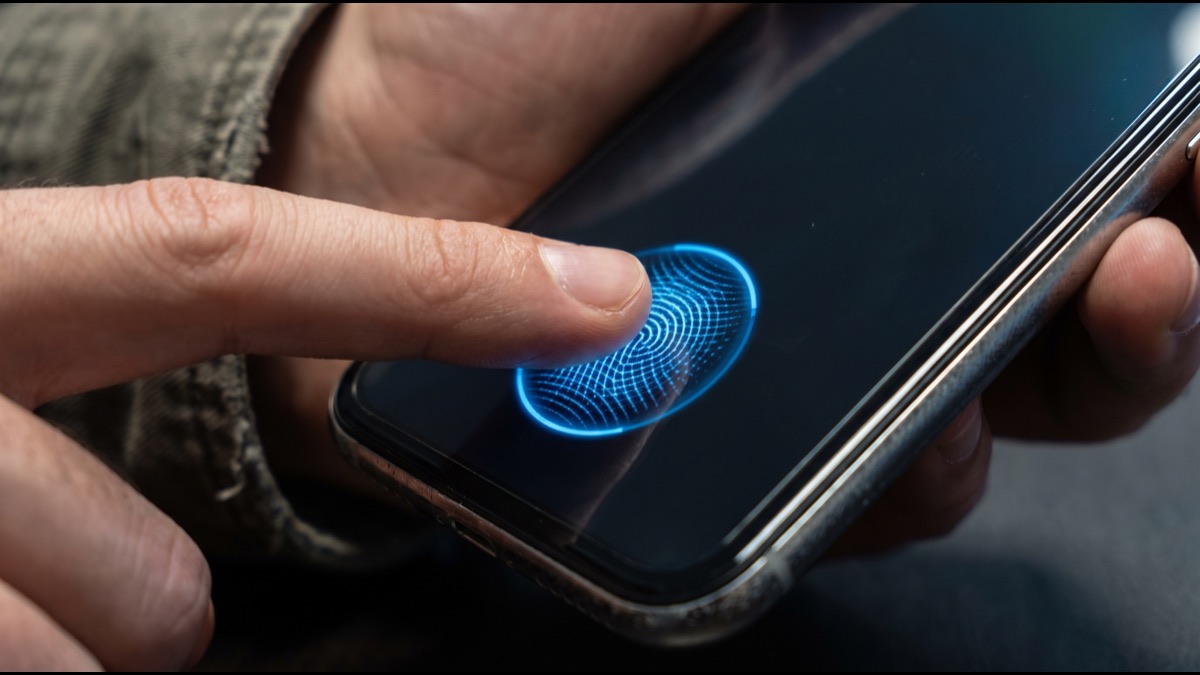
Unlocking a phone with a fingertip feels almost magical, a fraction of a second between touch and access, but underneath that instant response sits a surprisingly layered process involving physics, image processing, and cryptography that has nothing to do with storing a photograph of your finger. The sensor, the algorithm converting a touch into data, and the secure chip guarding that data are each doing distinct, well-defined jobs, and together they explain both how convenient fingerprint unlock has become and why it is not the flawless, unbreakable system popular culture sometimes imagines.
What a Fingerprint Actually Is, Physically
A fingerprint is the pattern of raised ridges and recessed valleys on the skin of a fingertip, a pattern that forms before birth and remains structurally stable for life, though the surface can be temporarily altered by cuts, moisture, or wear.
These ridges are not random; they form specific, describable patterns such as loops, whorls, and arches at a broad level, and much finer, more individually distinctive features called minutiae points, including ridge endings and bifurcations, at a detailed level.
Because the overall pattern type is shared by large portions of the population but the specific arrangement of minutiae points is extraordinarily unlikely to repeat between two different fingers, it is this fine-grained minutiae detail, not the broad pattern shape, that fingerprint sensors and matching algorithms are actually built to capture and compare.
How Capacitive Sensors Read a Fingerprint
Capacitive fingerprint sensors, the most common type historically used in smartphone home buttons, are built from a tiny grid of capacitor plates that measure minute differences in electrical charge across the surface of the sensor.
Because skin ridges touch the sensor directly while the valleys between ridges sit slightly farther away, the two surfaces alter the local electrical field differently, allowing the sensor to reconstruct a detailed map of ridge and valley positions purely from these electrical charge measurements.
Capacitive sensing is specifically effective because it responds to the physical structure of living skin, rather than to a flat printed image, making it substantially harder to fool with a simple two-dimensional photograph of a fingerprint than an optical camera-based approach would be.
How Optical Sensors Take a Different Approach
Optical fingerprint sensors work more like a tiny, specialized camera, illuminating the fingertip with light and capturing the resulting image of ridges and valleys based on how light reflects differently off the raised and recessed skin surface.
This approach is well suited to under-display sensors on modern smartphones, since a small area of the screen itself can briefly function as a light source and the sensor sits directly beneath the glass, capturing the reflected image through the display layers.
Optical sensors have historically been somewhat more susceptible to being fooled by high-quality printed or photographed fingerprint images than capacitive sensors, since they fundamentally analyze a two-dimensional light pattern rather than directly sensing the three-dimensional physical structure of skin.
How Ultrasonic Sensors Map Skin in 3D
Ultrasonic fingerprint sensors, increasingly common in premium smartphones, send high-frequency sound waves into the fingertip and measure how those waves bounce back, a method fundamentally similar in concept to medical ultrasound imaging.
Because sound waves reflect differently off ridges, valleys, and even sweat pores, and because this reflection genuinely captures three-dimensional depth information rather than a flat surface pattern, ultrasonic sensors can build a far more detailed structural map of a fingertip than either capacitive or optical sensing alone.
This three-dimensional depth data is precisely what makes ultrasonic sensors meaningfully more resistant to spoofing than earlier sensor types, since a flat printed or even a molded fake fingerprint generally fails to replicate accurate internal ridge depth and structure convincingly.
Why Your Phone Never Stores a Fingerprint Image
Regardless of sensor type, no mainstream smartphone or laptop actually stores a photographic image of a user's fingerprint on the device; doing so would create an enormous privacy and security liability if that image were ever extracted or leaked.
Instead, the sensor's raw scan data is immediately processed by an algorithm that extracts specific distinguishing features, primarily the minutiae points described earlier, and converts them into a compact mathematical representation called a template, discarding the original image-like data entirely.
This template cannot be reverse-engineered back into a usable fingerprint image, since it deliberately captures only a limited, abstracted set of relational data points, position and angle information about minutiae, rather than the full visual detail of the original scan.
Minutiae Points: What the Algorithm Actually Compares
Minutiae points are specific, identifiable features within a fingerprint's ridge pattern, most commonly ridge endings, where a ridge simply stops, and bifurcations, where a single ridge splits into two, each occurring at a specific location and angle unique to that particular finger.
A typical fingerprint contains dozens of usable minutiae points, and matching algorithms generally require a sufficient number of these points to align correctly, in both position and relative angle, between a new scan and the stored template before confirming a match.
This minutiae-based approach is deliberately more efficient and more privacy-preserving than comparing full images pixel by pixel, since it reduces an entire fingerprint down to a relatively small, structured dataset that is faster to process and dramatically harder to misuse if ever compromised.
Where the Fingerprint Template Actually Lives
On modern smartphones, the fingerprint template is stored within a dedicated, physically isolated hardware component, commonly called a secure enclave or trusted execution environment, deliberately separated from the device's general operating system and main processor.
This isolation means the fingerprint template is never directly accessible to regular apps, the operating system itself, or even, in most implementations, the device manufacturer, since the comparison between a new scan and the stored template happens entirely within this protected hardware boundary.
When an app requests fingerprint authentication, it receives only a simple yes-or-no confirmation from the secure enclave, never the underlying template data itself, a deliberate architectural choice that significantly limits what could be exposed even in the event of a broader software security breach.
Why Matching Is Probabilistic, Not Exact
Unlike comparing two identical digital files, fingerprint matching is inherently probabilistic, since no two scans of the same finger are ever pixel-for-pixel identical due to variations in pressure, angle, moisture, and minor skin changes between scans.
Matching algorithms therefore calculate a confidence score representing how closely a new scan's minutiae pattern aligns with the stored template, and unlock is granted only when that score exceeds a manufacturer-defined threshold calibrated to balance convenience against security.
This threshold calibration directly determines a sensor's false acceptance rate, the chance of wrongly matching a different finger, and false rejection rate, the chance of wrongly rejecting the correct finger, and manufacturers publish target rates that are generally extremely low but never mathematically zero for either category.
How Spoofing Attacks Have Historically Worked
Security researchers have successfully demonstrated fingerprint spoofing against various sensors over the years using techniques ranging from lifting a latent fingerprint left on a surface and creating a mold, to using high-resolution photographs combined with conductive materials to mimic the electrical properties capacitive sensors detect.
These successful demonstrations have almost always occurred under controlled research conditions, with access to a genuinely high-quality fingerprint sample and specialized materials or equipment, rather than representing an easy, casual attack achievable by an opportunistic bystander.
Manufacturers have responded to documented spoofing research by adding what is called liveness detection, additional checks such as sensing electrical conductivity patterns consistent with living tissue or, in some ultrasonic implementations, detecting subtle blood flow signals, specifically to reject artificial fingerprint replicas.
Why Ultrasonic Sensors Resist Spoofing Better
Because ultrasonic sensing captures genuine three-dimensional subsurface structure rather than a flat surface pattern, successfully spoofing an ultrasonic sensor generally requires replicating internal ridge depth and structure accurately, a substantially more difficult technical challenge than defeating a purely two-dimensional optical scan.
Independent security testing has generally found ultrasonic sensors more resistant to common spoofing techniques, including printed fingerprints and basic molds, than either capacitive or optical sensors, though researchers have still demonstrated successful attacks under specific, resource-intensive laboratory conditions.
This meaningfully higher resistance is a significant part of why premium smartphone manufacturers have increasingly adopted ultrasonic sensors for flagship devices, treating the added component cost as justified by the improved security margin against real-world spoofing attempts.
Why Fingerprint Unlock Sometimes Fails on the Right Finger
A genuine fingerprint owner is occasionally rejected by their own device's sensor, a frustrating but explainable outcome rooted in exactly the same variability that makes matching probabilistic rather than exact in the first place.
Moisture, dirt, minor cuts, unusually dry skin, cold-induced reduced blood flow to extremities, or simply an imperfect finger placement angle can all sufficiently distort the scanned ridge pattern, pushing the calculated confidence score below the threshold required for a successful match.
Manufacturers generally address this reliability tradeoff by allowing users to enroll multiple scans of the same finger from slightly different angles during setup, building a more robust template that tolerates a wider range of everyday placement variation.
How Under-Display Sensors Changed Phone Design
The shift from dedicated physical fingerprint buttons to sensors embedded directly beneath a smartphone's display screen, using either optical or ultrasonic technology, was driven primarily by the broader industry push toward larger screens with minimal visible bezels.
Under-display optical sensors require a small, precisely engineered area of the display to temporarily brighten and function as a light source during scanning, while under-display ultrasonic sensors need the display and any protective glass layered above the sensor to transmit sound waves effectively without excessive distortion.
This engineering shift genuinely changed smartphone industrial design, freeing manufacturers from needing a dedicated physical button or a rear-mounted sensor location, though it also introduced new engineering constraints around screen protector compatibility and sensor placement accuracy that did not exist with earlier button-based designs.
Legal Differences Between Fingerprints and Passcodes
In several legal jurisdictions, courts have drawn a meaningful distinction between compelling someone to provide a passcode, generally treated as testimonial evidence protected under certain constitutional rights, and compelling a fingerprint, sometimes treated more like physical evidence such as a blood sample.
This legal distinction means that, depending on jurisdiction, law enforcement may in some circumstances be able to compel a fingerprint unlock through legal process in situations where compelling a memorized passcode would face a higher legal barrier, a nuance that has real practical security implications beyond the purely technical.
Security researchers and privacy advocates generally recommend that users concerned about this specific legal distinction understand their own jurisdiction's current legal treatment of biometric versus passcode-based device access, since this varies meaningfully by country and continues to evolve through ongoing court decisions.
How Fingerprint Data Compares to Face Unlock Security
Face unlock systems, particularly those using dedicated infrared depth-sensing hardware rather than a simple 2D camera image, follow broadly similar architectural principles to fingerprint systems, converting a scan into a mathematical template stored within the same type of secure hardware enclave.
The key practical difference is exposure: a face is visible in countless photographs and video recordings, generally giving attackers more raw material to attempt spoofing than a fingerprint, which is comparatively harder to capture in high enough detail from a distance without direct physical contact or a deliberately obtained sample.
Security researchers generally consider well-implemented depth-sensing face unlock and modern ultrasonic fingerprint sensing to offer broadly comparable real-world security for most users, with the practical choice between them often coming down to convenience factors, such as sensor placement or mask-wearing, rather than a clear security advantage for either.
Common Misconceptions About Fingerprint Unlock
A common misconception is that a fingerprint sensor works like a camera taking a permanent photo of a finger that gets stored and later compared directly; in reality, the process extracts and discards the raw scan almost immediately, storing only an abstracted mathematical template.
Another misconception treats fingerprint matching as a perfect, exact process, similar to comparing two identical files; in reality it is inherently probabilistic, based on a confidence score against a threshold, which is precisely why both false rejections of the correct finger and, in rare cases, false acceptances of a different finger remain mathematically possible.
A third misconception assumes all fingerprint sensors offer identical security; capacitive, optical, and ultrasonic sensors differ meaningfully in what physical properties they actually measure, and that underlying difference directly affects how resistant each sensor type is to spoofing attempts.
Fingerprint unlock is neither the flawless biometric vault popular culture sometimes suggests nor a fundamentally insecure gimmick; it is a carefully engineered system combining specific sensor physics, capacitive, optical, or ultrasonic, with mathematical template matching and hardware-isolated storage, each component addressing a distinct part of the security and privacy problem. Understanding how these pieces actually work explains both its genuine convenience and its real, well-documented limitations, and it clarifies why the specific sensor technology inside a given device meaningfully affects how resistant that device actually is to a determined attacker.
Sources
- National Institute of Standards and Technology — Technical standards and research on biometric fingerprint matching accuracy.
- Federal Bureau of Investigation — Background on fingerprint minutiae analysis and biometric identification methods.
- Electronic Frontier Foundation — Legal analysis of biometric authentication and device access rights.
- Institute of Electrical and Electronics Engineers — Technical research on capacitive, optical, and ultrasonic sensor technology.
FAQ
Does my phone store an actual image of my fingerprint?
No, fingerprint sensors convert the scanned pattern into a mathematical template describing specific ridge features, and this template, not an image, is what gets stored in a secure, encrypted chip on the device.
What is the difference between capacitive, optical, and ultrasonic fingerprint sensors?
Capacitive sensors measure tiny electrical charge differences between ridges and valleys, optical sensors take a light-based image of the fingerprint pattern, and ultrasonic sensors bounce sound waves off the finger to map its 3D ridge structure.
Can a fingerprint sensor be fooled with a fake fingerprint?
Basic spoofing with printed or molded fake fingerprints has succeeded against some older sensors in controlled tests, but modern sensors, especially ultrasonic ones checking for 3D depth and, in some cases, blood flow, are significantly more resistant to this kind of attack.
Why does fingerprint unlock sometimes fail even with the correct finger?
Moisture, dirt, minor cuts, dry skin, or an imperfect finger placement can all change how ridges appear to the sensor enough that the matching algorithm falls below its required confidence threshold and rejects the attempt.
Is fingerprint unlock more secure than a passcode?
Fingerprint unlock is generally more convenient and resistant to casual shoulder-surfing than a passcode, but security experts note it cannot be legally compelled in some jurisdictions the same way a passcode disclosure can be, which is a meaningfully different kind of protection.
About the Author
We reference the National Institute of Standards and Technology, the Federal Bureau of Investigation, the Electronic Frontier Foundation, and the Institute of Electrical and Electronics Engineers to explain the background and current understanding of this topic.
Loved This Article?
Share it on WhatsApp → Share it on WhatsApp
Get more guides in your inbox — Subscribe to our newsletter for weekly surprising stories from Egypt, Saudi Arabia, Dubai, and beyond.