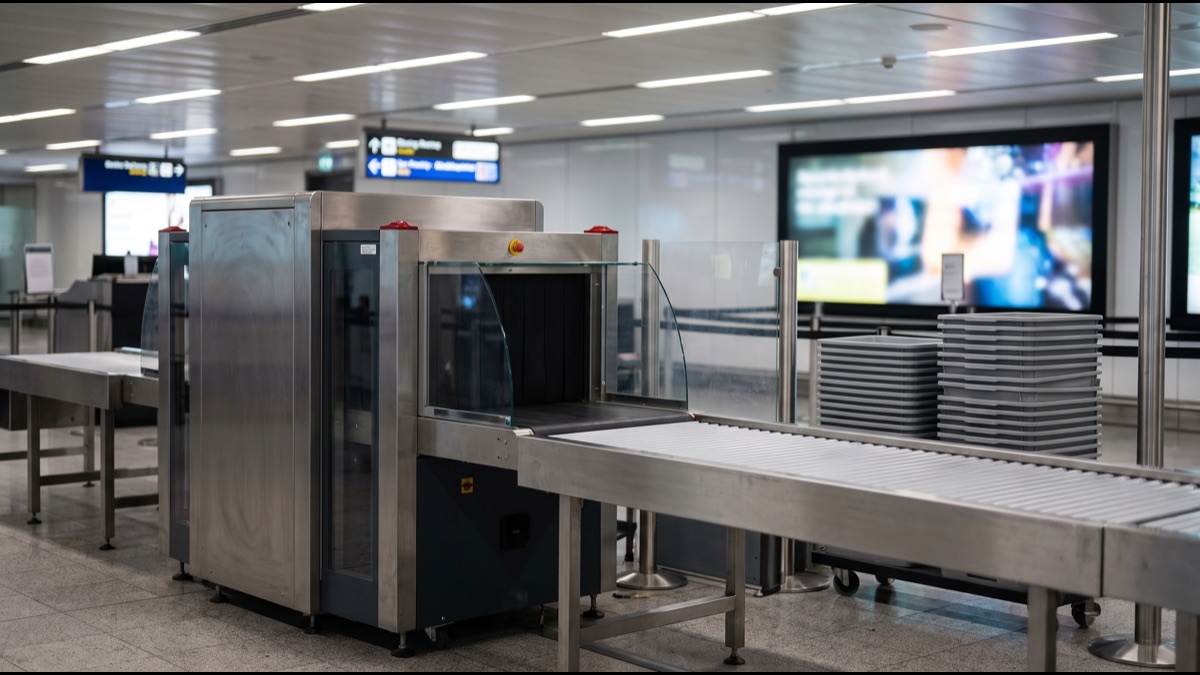
Every year, billions of passengers walk through an airport body scanner or watch their bags disappear into an X-ray tunnel without much thought about what the machine is actually doing. Behind that few seconds of waiting is a combination of physics, image-processing software, and layered procedure that has changed substantially over the past two decades, partly in response to specific threats and partly in response to public pushback over privacy. Understanding how these systems actually work also clarifies their real limits, since no scanner, however advanced, functions as a perfect, all-seeing detector.
The Two Very Different Kinds of Airport Scanners
Airport security relies on two functionally distinct categories of scanning technology: body scanners, which check passengers for concealed items, and baggage scanners, which check carry-on and checked luggage for prohibited or dangerous contents.
These systems use different physical principles and were developed largely independently, driven by different threat concerns, body scanners primarily to detect non-metallic concealed weapons and explosives after specific attempted attacks, and baggage scanners to detect a broader range of prohibited items including explosives hidden within complex luggage contents.
Understanding them separately matters because confusion between the two is common; a millimeter-wave body scanner and a CT baggage scanner work on entirely different technical principles despite both being described casually as 'airport scanners.'
How Millimeter-Wave Body Scanners Work
The body scanners most travelers now walk through at major airports use millimeter-wave technology, which bounces low-energy electromagnetic waves, similar in category to those used in some wireless communications, off a passenger's body and clothing from multiple angles.
Because these millimeter waves reflect differently off skin, clothing, and foreign objects, including plastic, ceramic, and metal, the system can detect objects concealed under clothing regardless of the material, which was a specific improvement over older metal detectors that could only reliably flag metallic items.
The U.S. Transportation Security Administration and equivalent international bodies have described millimeter-wave technology as using non-ionizing radiation at power levels considered safe for repeated use, distinguishing it clearly from ionizing X-ray-based technology in terms of the radiation safety questions it raises.
Why Millimeter-Wave Replaced Backscatter X-Ray Scanners
Airports in the United States and several other countries previously used backscatter X-ray body scanners, which produced a detailed image resembling a nude silhouette of the passenger's body, a design that generated significant public controversy over privacy.
The TSA phased out backscatter scanners by 2013, following both public pressure and a mandate from the U.S. Congress requiring that body-scanning technology display a generic outline rather than an anatomically detailed image, a requirement millimeter-wave systems with automated detection software could meet in a way backscatter systems at the time could not.
Beyond the privacy issue, some researchers and advocacy groups had also raised questions about cumulative X-ray radiation exposure from backscatter scanners, though regulatory bodies had generally assessed the dose from occasional screening as very low; the privacy concern was the more decisive factor in the technology's phase-out.
What the Automated Target Recognition Software Actually Does
Modern millimeter-wave scanners use software called automated target recognition, which analyzes the reflected wave data in real time and overlays a generic, gender-neutral human outline on a monitor, flagging only the general body location of any anomaly rather than displaying a detailed image of the passenger.
When the software detects a potential anomaly, it marks the corresponding area on the generic outline with a colored box, prompting a human screener to conduct a targeted pat-down or additional check of that specific area rather than reviewing an image of the passenger's actual body.
This software-based abstraction was the specific technical innovation that allowed millimeter-wave scanners to satisfy both security and privacy requirements simultaneously, and it's a meaningfully different approach from simply displaying a raw scan image to a screener, which was standard practice under the older backscatter systems.
How Walk-Through Metal Detectors Still Fit In
Traditional walk-through metal detectors, which work by detecting disturbances in a magnetic field created by conductive metal objects, remain in use at many airports worldwide, particularly smaller regional airports and many countries outside the small group that have widely deployed millimeter-wave systems.
Metal detectors are simpler, cheaper, and faster to operate than millimeter-wave scanners, but they share an obvious limitation: they cannot detect non-metallic threats, including certain plastic explosives and ceramic weapons, which is precisely the gap millimeter-wave technology was developed to close.
Many airports use metal detectors as a first-tier, general screening tool, reserving millimeter-wave scanning for randomly selected passengers or those flagged for additional screening, a layered approach rather than relying on a single technology for every traveler.
How Traditional X-Ray Baggage Screening Works
Conventional baggage X-ray machines pass luggage through a fan-shaped X-ray beam, and different materials inside the bag absorb and scatter the X-rays differently depending on their density and atomic composition, producing the two-dimensional grayscale or false-color image screeners see on their monitor.
Most systems use dual-energy X-ray technology, which fires the beam at two different energy levels to help distinguish organic materials, colored orange or similar warm tones on screen, from inorganic materials like metal, typically shown in blue or green, giving screeners a meaningful visual shortcut for identifying suspicious items.
The main practical limitation of traditional 2D X-ray screening is that it produces a flattened, overlapping image of a bag's contents, meaning densely packed or deliberately obscured items can be genuinely difficult for a human screener to interpret correctly, especially in complex or cluttered bags.
Computed Tomography: The New Generation of Baggage Scanners
Computed tomography, or CT, baggage scanners, increasingly deployed at major airports, use the same basic principle as medical CT scanners: rotating X-ray sources capture data from many angles around the bag, which software then reconstructs into a detailed three-dimensional image.
Because screeners can rotate and examine a full 3D reconstruction of a bag's contents rather than a single flattened 2D image, CT scanning substantially reduces the ambiguity that plagued older systems, and many CT systems now include automated explosive-detection algorithms that flag suspicious density and shape signatures without requiring the human screener to catch everything visually.
A major practical advantage driving CT adoption is that passengers at CT-equipped airports frequently no longer need to remove laptops and liquids from their carry-on bags, since the clearer 3D imaging allows screeners and detection software to identify these items without the separate removal step previously required.
How Explosive Trace Detection Swabs Work
Explosive trace detection, the swabbing procedure travelers sometimes encounter on bags, hands, or electronics, works by collecting microscopic particle residue from a surface and analyzing it, typically using a technique called ion mobility spectrometry, which can identify trace chemical signatures associated with known explosive compounds.
This method is highly sensitive, capable of detecting residue at extremely small concentrations, but it specifically detects surface contact residue rather than bulk material, meaning it complements rather than replaces X-ray or CT imaging, which detects the physical presence and shape of an item regardless of surface contamination.
Explosive trace detection is generally used as a targeted secondary check, applied to specific items or passengers flagged during primary screening, or as an additional random layer, rather than as the primary screening method for the general passenger flow.
What Scanners Can and Cannot Actually Detect
Body scanners and baggage X-ray or CT systems are generally effective at detecting objects with distinct density, shape, or material signatures that differ meaningfully from the human body or typical luggage contents, including metallic weapons, most explosive compounds, and unusually shaped concealed items.
These systems are inherently less effective, though not entirely blind, when it comes to detecting threats deliberately shaped or concealed to mimic normal body contours or common luggage contents, or substances specifically engineered to defeat a given detection method's particular sensitivity profile, which is part of why security relies on multiple overlapping technologies rather than any single scanner.
Independent testing, including audits conducted by government oversight bodies, has periodically found gaps in detection performance at various airports, findings that have generally prompted equipment upgrades, procedural changes, or additional screener training rather than suggesting the underlying technology is fundamentally unreliable.
How Often Scanners Produce False Alarms
False alarms, meaning the scanner flags something that turns out to be harmless, such as sweat, certain clothing fabrics, or medical devices, are a routine and expected part of airport screening, not a sign of system malfunction, since detection systems are generally tuned to prioritize catching genuine threats over minimizing false positives.
Security researchers describe this as an inherent tradeoff: making a detection system less prone to false alarms generally means making it less sensitive to genuine threats as well, so screening systems are deliberately calibrated toward erring on the side of additional, ultimately unnecessary checks rather than risking a missed detection.
This is also why passengers with medical implants, certain prosthetics, or specific clothing items are advised to inform screeners in advance, since this can help streamline the secondary check process that follows a routine, expected false alarm.
The Human Factor: Screener Training and Image Interpretation
Even with increasingly sophisticated automated detection software, human screeners remain a critical part of the system, responsible for interpreting flagged anomalies, conducting secondary checks, and making judgment calls that automated systems are not designed to make independently.
Screener performance in interpreting complex X-ray images has been studied extensively by aviation security researchers, who have generally found that performance varies with fatigue, image complexity, and the rarity of genuine threats in the overall passenger stream, a phenomenon related to a broader psychological pattern sometimes called the 'rare target effect,' where searchers become less accurate at detecting something they very rarely actually see.
Ongoing training programs, ergonomic improvements to screening station design, and image-based testing systems that periodically insert simulated threat images into the live screening stream have all been used by aviation security agencies specifically to counteract this fatigue and rare-target effect.
Privacy Concerns and How They Were Actually Addressed
The shift from image-based backscatter scanning to the generic-outline millimeter-wave approach was directly driven by sustained public and legislative pressure over privacy, illustrating how security technology deployment is shaped by factors well beyond pure technical capability.
Civil liberties organizations, including groups that filed formal legal challenges in the United States, argued that displaying detailed body images to screeners, even with policies restricting image storage, created an unacceptable privacy intrusion, a position that ultimately influenced the regulatory requirement for automated, non-image-based detection.
Current millimeter-wave systems, as deployed under this framework, are generally designed not to store or transmit images at all, processing the scan data locally and displaying only the generic outline with anomaly markers, addressing the core privacy objection that drove the earlier technology's phase-out.
How TSA PreCheck and Trusted Traveler Programs Change the Process
Trusted traveler programs like TSA PreCheck in the United States and comparable programs in other countries allow pre-vetted, background-checked travelers to use expedited screening lanes that generally involve walk-through metal detectors rather than full body scanners, and that typically don't require removing shoes, belts, or laptops.
This approach reflects a risk-based screening philosophy: rather than applying maximum scrutiny uniformly to every passenger, security resources are concentrated more heavily on travelers about whom less is known, while known, vetted travelers receive a faster, lighter-touch process.
Aviation security researchers generally view risk-based, differentiated screening as a more efficient use of limited security resources than uniform maximum screening for every passenger, though it does depend on the underlying vetting process itself remaining reliable and resistant to circumvention.
Why Liquid and Laptop Rules Are Loosening in Some Airports
The long-standing rules restricting liquids to small containers and requiring laptops to be removed from bags originated from specific, credible threats involving liquid explosives and concealed electronic devices, not arbitrary inconvenience, and were implemented as an immediate response when older X-ray technology couldn't reliably distinguish these threats from ordinary items.
As CT baggage scanning has spread to more airports, several, particularly in parts of Europe and some major U.S. hubs, have begun allowing passengers to leave laptops and standard-sized liquids in their bags, since the clearer 3D imaging generally makes the original detection concern moot for those upgraded checkpoints specifically.
This rollout remains uneven and airport-specific rather than a uniform global policy change, so travelers are generally still advised to check current requirements for their specific departure airport rather than assuming rules have changed everywhere.
How International Standards Shape Airport Scanner Requirements
Airport security technology requirements are shaped substantially by international bodies, particularly the International Civil Aviation Organization, which sets baseline standards that member states generally incorporate into national aviation security regulation, alongside country-specific requirements like those set by the TSA in the United States or the European Union Aviation Safety Agency.
These standards bodies periodically update minimum detection performance requirements as threats and technology evolve, which is part of why airports upgrade scanning equipment on a multi-year cycle rather than continuously, balancing genuine security improvement against the substantial cost of equipment replacement across a large airport network.
Differences in national regulation and funding mean scanner technology deployment is genuinely uneven across the world, with wealthier countries and major international hubs generally adopting newer CT and millimeter-wave technology earlier than smaller or lower-traffic airports.
Common Misconceptions About Airport Security Scanners
A common misconception is that millimeter-wave body scanners use X-rays; they don't. Millimeter-wave technology uses non-ionizing radio-frequency waves, a fundamentally different and, according to health agencies, lower-risk category of radiation than the ionizing X-rays used in some baggage screening and, historically, in backscatter body scanners.
Another misconception is that screeners viewing body scans today see a detailed image of the passenger's body; under the current millimeter-wave, automated-detection system deployed at most major airports, they see only a generic outline with anomaly flags, not an anatomical image.
A third misconception treats airport scanning as a single, uniform technology worldwide; in reality, the mix of metal detectors, millimeter-wave scanners, 2D X-ray, and CT baggage scanning varies considerably by country, airport size, and checkpoint, meaning the screening experience genuinely differs between airports rather than following one universal standard.
Airport security scanning has evolved considerably from simple metal detectors and flat X-ray images into a layered system combining millimeter-wave body imaging, computed tomography baggage scanning, chemical trace detection, and increasingly capable automated software, each addressing a different part of the detection problem. No individual technology is perfect, and the system relies on combining several imperfect but complementary tools along with trained human judgment rather than any single all-seeing machine. Understanding how these systems actually work, and why certain rules exist or are changing, makes the process feel less arbitrary even when it remains, inevitably, a little inconvenient.
Sources
- U.S. Transportation Security Administration — Information on body scanner and baggage screening technology.
- International Civil Aviation Organization — International standards for aviation security screening.
- European Union Aviation Safety Agency — European aviation security technology requirements.
- U.S. Government Accountability Office — Independent audits of airport screening technology performance.
FAQ
Do airport body scanners use X-rays?
No, current millimeter-wave body scanners used at most major airports use non-ionizing radio-frequency waves, not X-rays; X-ray-based backscatter body scanners were phased out in the United States by 2013.
Can airport scanners see a detailed image of your body?
Under the current millimeter-wave system, screeners see only a generic, gender-neutral outline with markers showing where an anomaly was detected, not a detailed image of the passenger's actual body.
Why do some airports no longer require removing laptops and liquids?
Airports that have upgraded to computed tomography, or CT, baggage scanners can generate detailed 3D images of bag contents, which often makes it unnecessary to remove laptops and liquids for separate screening.
What is explosive trace detection swabbing for?
It collects microscopic residue from a surface, such as a bag or hands, and analyzes it for chemical signatures associated with explosives, complementing X-ray or CT imaging rather than replacing it.
Why do airport scanners sometimes trigger false alarms?
Detection systems are deliberately calibrated to prioritize catching genuine threats over avoiding false positives, so harmless items like certain fabrics, sweat, or medical devices can trigger a routine secondary check.
About the Author
We reference the U.S. Transportation Security Administration, the International Civil Aviation Organization, the European Union Aviation Safety Agency, and the U.S. Government Accountability Office to explain the background and current understanding of this topic.
Loved This Article?
Share it on WhatsApp → Share it on WhatsApp
Get more guides in your inbox — Subscribe to our newsletter for weekly surprising stories from Egypt, Saudi Arabia, Dubai, and beyond.